
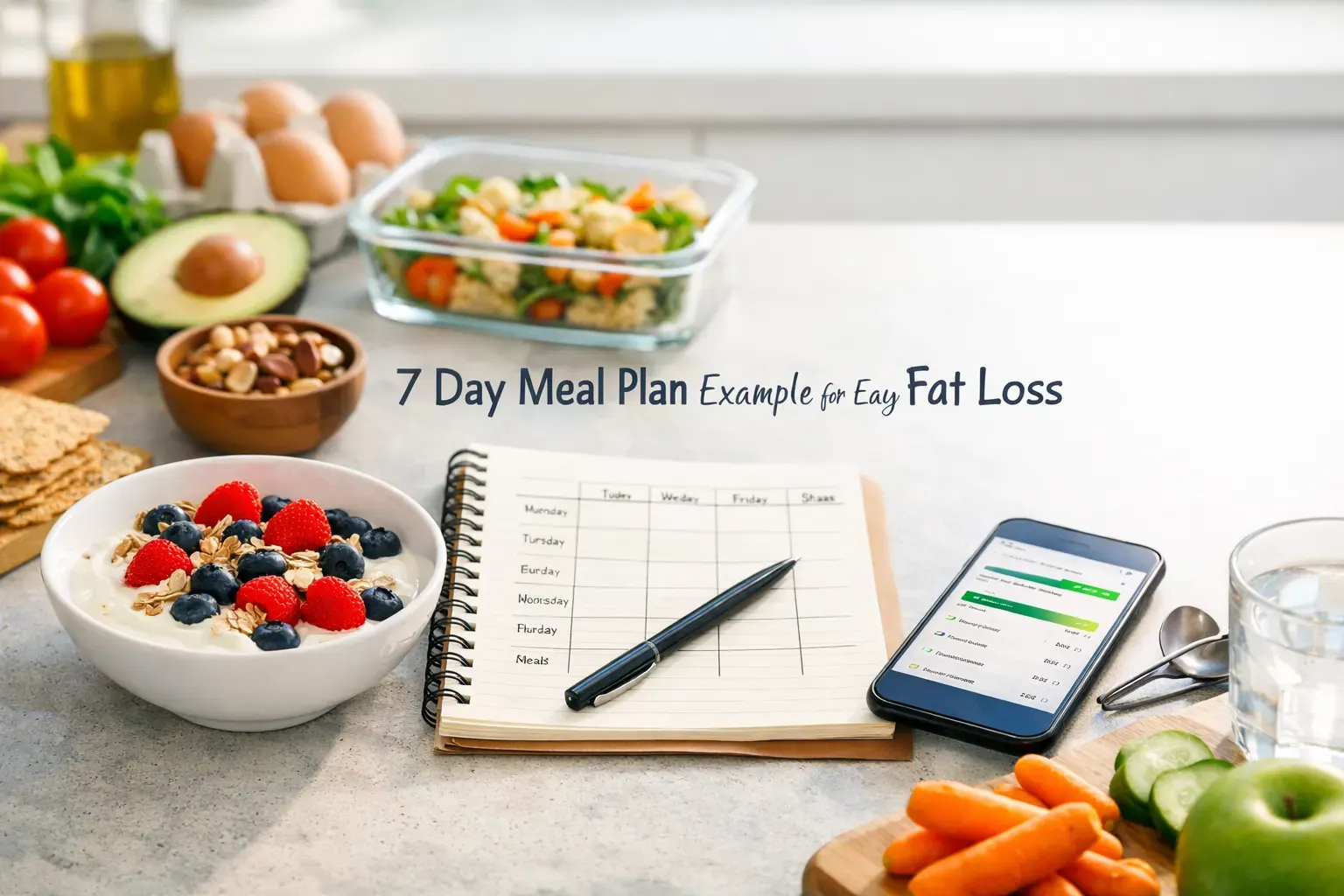
If your week tends to go off track at about 3 pm on a Wednesday, the problem usually is not willpower. It is decision fatigue. A solid 7 day meal plan example removes that pressure by giving your calories a job before the week starts, so you are not negotiating with yourself every time you feel hungry.
That is why weekly planning works so well for fat loss. You are not trying to eat perfectly. You are simply allocating your calorie budget across seven ordinary days in a way you can actually stick to. Think less crash diet, more controlled spending.
How this 7 day meal plan example works
This plan is built for people who want structure without spending hours meal prepping or tracking every gram. It aims for roughly 1,600 to 1,800 calories per day, which suits many adults trying to create a modest calorie deficit. That said, your target depends on your size, activity, goals and how aggressively you want to lose weight.
Each day includes breakfast, lunch, dinner and one to two snacks. The meals are familiar, easy to shop for and flexible enough to swap around. If you prefer a bigger breakfast and lighter evening meal, adjust the spending. The weekly budget matters more than making every day identical.
7 day meal plan example
Day 1
Breakfast is Greek yoghurt with berries, a spoon of oats and a few chopped almonds. It is quick, high in protein and easy to portion. If mornings are rushed, this is the sort of meal that stops a coffee-and-pastry detour becoming your first budget overspend of the day.
Lunch is a chicken wrap with salad, light yoghurt dressing and a piece of fruit. Keep the wrap satisfying rather than tiny. Meals that look healthy but leave you hungry often lead to expensive snacking later.
Dinner is baked salmon, new potatoes and steamed broccoli. Add a little olive oil or lemon for flavour. Snack-wise, go for an apple with peanut butter or a boiled egg if you need something more savoury.
Day 2
Breakfast is scrambled eggs on wholemeal toast with grilled tomatoes. This gives you a steadier start than sugary cereal and tends to keep hunger quieter through the morning.
Lunch is lentil soup with a slice of wholemeal bread and a side salad. It is budget-friendly, filling and useful if you want at least one lower-cost, lower-effort lunch in the week.
Dinner is turkey mince chilli with rice and a spoon of reduced-fat yoghurt. Make extra if you can. Leftovers are one of the easiest ways to keep weekday decisions under control. For a snack, have cottage cheese with pineapple or a banana.
Day 3
Breakfast is overnight oats made with milk, chia seeds and sliced banana. It is practical, portable and easy to tweak if your calorie target changes. More oats and nut butter if you need a bigger breakfast, less if your lunch is usually larger.
Lunch is a tuna pasta salad with sweetcorn, cucumber and a light dressing. This works well for office days because it travels easily and still feels like a proper meal.
Dinner is chicken stir-fry with mixed vegetables and noodles. Use plenty of veg to increase volume without burning through too much of your calorie allowance. A snack could be a protein yoghurt or a small handful of mixed nuts.
Day 4
Breakfast is a smoothie made with Greek yoghurt, frozen berries, spinach and a banana. Smoothies can be useful, but they are easy to underestimate. Measure the calorie-dense extras rather than free-pouring them.
Lunch is a jacket potato with baked beans, grated cheese and salad. It is simple, satisfying and far more reliable than pretending a sad desk salad will carry you through the afternoon.
Dinner is lean beef meatballs with tomato sauce and spaghetti, plus green beans on the side. If you enjoy a more generous evening meal, this is a good place to spend more of your daily calories. Snack on carrots with hummus or a square or two of dark chocolate if that helps with adherence.
Day 5
Breakfast is porridge topped with blueberries and a spoon of peanut butter. This is a strong option for colder mornings and for anyone who gets hungry quickly after lighter breakfasts.
Lunch is a grilled chicken and couscous bowl with roasted vegetables. Bowls work well because they are easy to batch cook and easy to track. You can also change the flavour profile without changing the structure.
Dinner is cod with sweet potato wedges and peas. Keep sauces simple unless you are tracking them properly. Extras such as mayonnaise, creamy dressings and oil-heavy marinades can quietly eat into your budget. For a snack, try rice cakes with cottage cheese or grapes.
Day 6
Breakfast is two poached eggs, toast and sautéed mushrooms. Weekends often go wrong because routines disappear, so it helps to keep breakfast straightforward rather than turning it into an all-day grazing event.
Lunch is a turkey and avocado sandwich with salad and a yoghurt. If you are out and about, this is the kind of meal you can recreate from a supermarket meal deal with a bit of care.
Dinner is homemade fajita bowls with chicken, peppers, rice, salsa and a small amount of grated cheese. This is a good example of a meal that feels generous without being chaotic. You are still eating food you enjoy, just with the portions doing some of the discipline for you. Snack on popcorn or fruit if needed.
Day 7
Breakfast is skyr or Greek yoghurt with granola and strawberries. Keep an eye on granola portions. It is nutritious enough, but it can become expensive in calorie terms very quickly.
Lunch is a vegetable omelette with toast and side salad. This is useful for using up leftover vegetables before the next shop and keeping food waste down.
Dinner is roast chicken breast, roast potatoes, carrots and greens with a little gravy. Sunday meals do not need to be perfect to fit your plan. They just need sensible portions and a bit of awareness. If you want a snack later, choose something you genuinely enjoy and account for it.
What makes a weekly meal plan actually sustainable
The best meal plan is not the one with the cleanest ingredients list. It is the one that survives busy mornings, late meetings, supermarket shortcuts and the odd social meal. That usually means repeating a few breakfasts, keeping lunches predictable and saving your creativity for dinners.
Protein helps. Fibre helps. Convenience helps even more than people admit. If a meal is technically balanced but takes 45 minutes on a work night, it may not be realistic. A good plan respects your energy, not just your intentions.
There is also a trade-off between variety and consistency. More variety can stop boredom, but too much can make shopping, prep and tracking harder. For many people, the sweet spot is two breakfast options, two or three lunch rotations and a handful of dinners.
How to adjust this 7 day meal plan example to your calorie budget
If your target is lower, trim portions before removing whole meals. Slightly less rice, fewer calorie-dense toppings, leaner snacks and more vegetables often make the plan fit without making it feel punishing. If your target is higher, increase carbohydrates around breakfast and lunch, or add an extra snack with protein.
This is where a budgeting mindset helps. You are not being good or bad. You are making spending choices. A pub meal on Friday may mean a lighter lunch, not a ruined week. Equally, if you know evenings are your weak point, it can make sense to save more calories for dinner and dessert rather than forcing a pattern that never feels natural.
Tracking also becomes easier when the plan is simple. Snap meals, scan barcodes and reuse the meals you already know work. With a tool like Calorie Bank Credit, that process feels less like admin and more like checking your balance.
A few smart swaps when life gets messy
Some weeks do not behave. You work late, the fridge is half empty or lunch happens between meetings. That does not mean the plan has failed. It means you need fallback meals that protect your progress.
Keep a few options on hand such as soup, eggs, microwave rice, tinned tuna, frozen veg and high-protein yoghurt. These are not glamorous, but they stop one rushed decision from rolling into a full weekend of overspending. The goal is not perfect meal prep. It is damage control with decent nutrition.
Restaurant meals and takeaways can fit too, but it depends on frequency and portions. If they are occasional, build around them. If they happen most days, your planning needs to focus more on ordering habits than home cooking.
A good week of eating should feel manageable enough to repeat. If your plan leaves you constantly hungry, bored or socially isolated, the maths may work on paper but the habit will not last. Start with a week you can afford, in calorie terms and in real life, then keep refining it until consistency feels almost automatic.