
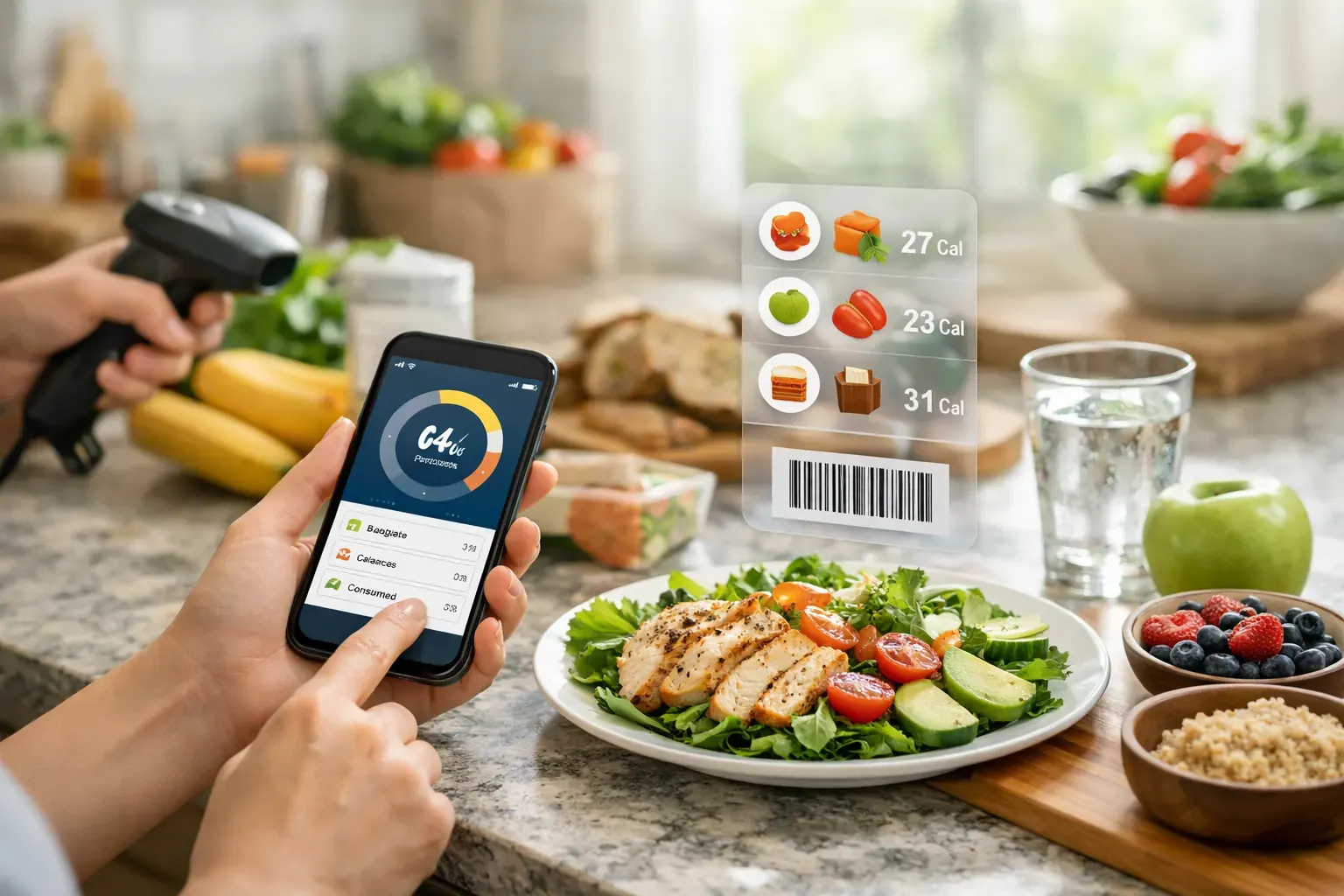
Most people do not quit calorie tracking because they lack motivation. They quit because it becomes admin. Searching for foods, guessing portions, correcting entries and trying to make sense of numbers after a long day is enough to put anyone off. That is exactly where an ai calorie tracker app can change the experience - not by making weight loss magical, but by making the daily process faster, clearer and easier to repeat.
If your goal is to lose weight or manage intake without turning every meal into a maths exercise, the real win is consistency. A useful app should help you log food in seconds, understand your daily calorie budget at a glance and make better decisions before hunger takes over. When it does that well, tracking feels less like punishment and more like keeping your spending in check.
What makes an ai calorie tracker app worth using?
The best tools do more than count calories. They reduce friction. That matters because even a smart plan fails if it asks too much from you on a busy Tuesday.
A strong ai calorie tracker app should let you snap a meal, scan a barcode and move on. If it can also turn your daily target into a simple budget, the whole system becomes easier to follow. You are no longer staring at abstract nutrition data. You are working with a clear allowance for the day and seeing how each meal fits inside it.
That budgeting model is useful for a reason. Most people already understand spending limits better than they understand macro ratios or dietary theory. Framing intake as a daily credit helps you see what is affordable, what needs adjusting and where small changes actually matter. It creates structure without the usual diet drama.
Why speed matters more than perfect logging
A common mistake with calorie tracking is chasing precision so hard that you stop tracking altogether. In real life, perfect entries are rare. Meals out vary, homemade portions are not exact and some labels are less helpful than they should be.
That does not mean tracking is pointless. It means the app needs to support useful consistency rather than perfectionism. If you can log most meals quickly and stay broadly honest, you are in a much stronger position than someone who logs flawlessly for three days and then gives up.
This is where AI features earn their place. Photo recognition can help estimate a meal without forcing you to build it ingredient by ingredient. Barcode scanning cuts out manual search for packaged foods. Calendar history lets you check patterns over time rather than judging a single lunch in isolation. Each feature removes a little friction, and that adds up.
There is a trade-off, of course. AI estimates are not always exact. A photo of pasta cannot know every gram of oil or cheese used. But for most users, the practical question is not whether the app is flawless. It is whether it helps them stay aware, stay accountable and stick to a sensible deficit over weeks rather than hours.
The best ai calorie tracker app should help you plan, not just react
Many calorie apps are basically digital notebooks. You eat first, then record the damage later. That can still be useful, but it is not ideal if you are trying to stay within a calorie deficit consistently.
Planning changes the game. When an app can generate a seven-day meal plan, suggest recipes from ingredients you already have or help you map meals into your calorie budget before the day starts, you are less likely to make tired decisions at 8 pm. You are not relying on willpower alone. You are working from a plan.
This matters most for busy people. If your week includes office lunches, family dinners, supermarket meal deals and the occasional takeaway, you need a system that handles normal life. A rigid diet sheet often falls apart because it assumes every day will be tidy. A planning-led app gives you more room to adjust while still keeping your total intake under control.
That is also why the finance-style framing works so well. If breakfast runs a bit high, you can rebalance the rest of the day. If you know dinner out is coming, you can budget for it. The goal is not to eat like a machine. It is to stay in control without overthinking every bite.
What to look for in daily use
When people search for the right app, they often focus on the headline technology. AI sounds impressive, but the real question is whether it saves time in the moments that usually cause drop-off.
Look for an app that makes logging feel almost automatic. Photo logging should be quick. Barcode scanning should work reliably. Food history should be easy to review. If you repeat meals often, re-logging them should take seconds.
It also helps if progress is visible in a simple format. A daily calorie budget, a clear record of what you have already consumed and a view of longer-term trends all support better choices. Complex dashboards can look clever, but they often bury the one thing you need to know right now - how much room is left in your day.
Reports can be useful too, especially if you like reviewing progress properly or sharing it with a coach or clinician. Exportable PDFs may sound like a small feature, but they can turn vague impressions into something measurable. If your weight loss has stalled, a clear report makes it easier to spot whether the issue is weekends, portion creep or inconsistent logging.
Where AI helps - and where it does not
AI can remove effort, but it cannot replace judgement. That is worth being honest about.
It can identify foods from a photo, suggest likely calorie values and speed up logging dramatically. It can recognise patterns in your eating history and support faster planning. It can help turn a scattered routine into something repeatable.
What it cannot do is override your choices. If you frequently underestimate liquid calories, graze without logging or treat weekends as a free-for-all, no app will fix that on its own. The best tools support discipline. They do not do the discipline for you.
That is not a drawback. It is actually good news. Sustainable progress usually comes from a simple system you can keep using, not from chasing a perfect tool. The app should lower the barrier to good decisions, not pretend there is no effort involved.
A better fit for beginners and frustrated trackers
For beginners, an ai calorie tracker app can make the whole process less intimidating. You do not need deep nutrition knowledge to start. You need a clear target, a fast way to log meals and enough feedback to see whether your habits are moving in the right direction.
For people who have tried calorie tracking before and hated it, the difference is usually ease. Manual apps often feel like homework. A better-designed system feels more like checking your balance. You know where you stand, you know what is left and you can adjust without spiralling into guilt.
That emotional difference matters. Shame is not a reliable long-term strategy. Clear feedback is. When the app presents your day as a budget to manage rather than a test to pass or fail, it becomes easier to recover from imperfect meals and keep going.
That is one reason tools like Calorie Bank Credit stand out. By treating calories like daily credit instead of moral points, the process becomes easier to understand and easier to repeat. Snap meals, scan barcodes, build a sustainable deficit - that is a much more useful routine than chasing perfection.
The real result is not just weight loss
Yes, the obvious goal is often fat loss. But the bigger benefit is control. You stop guessing. You stop telling yourself you have been "quite good" without any proof. You start seeing how your normal meals affect your daily budget, and that gives you room to change the bits that matter most.
Maybe that means tightening up weekday snacks. Maybe it means planning lunches better. Maybe it means realising your healthy-looking coffee order is costing more calories than you thought. Small corrections are easier when the numbers are visible and the process is not a faff.
The best app is not the one with the most features on a comparison chart. It is the one you will still be using next month because it fits your life, saves time and helps you make steady decisions with less effort. If tracking has felt tedious or all-or-nothing in the past, that is the standard worth aiming for.
Choose a tool that helps you stay aware without becoming obsessed, keeps the process simple and gives you a daily system you can actually live with. When calorie tracking feels more like managing a budget than following a punishment plan, staying on track becomes a lot more realistic.