
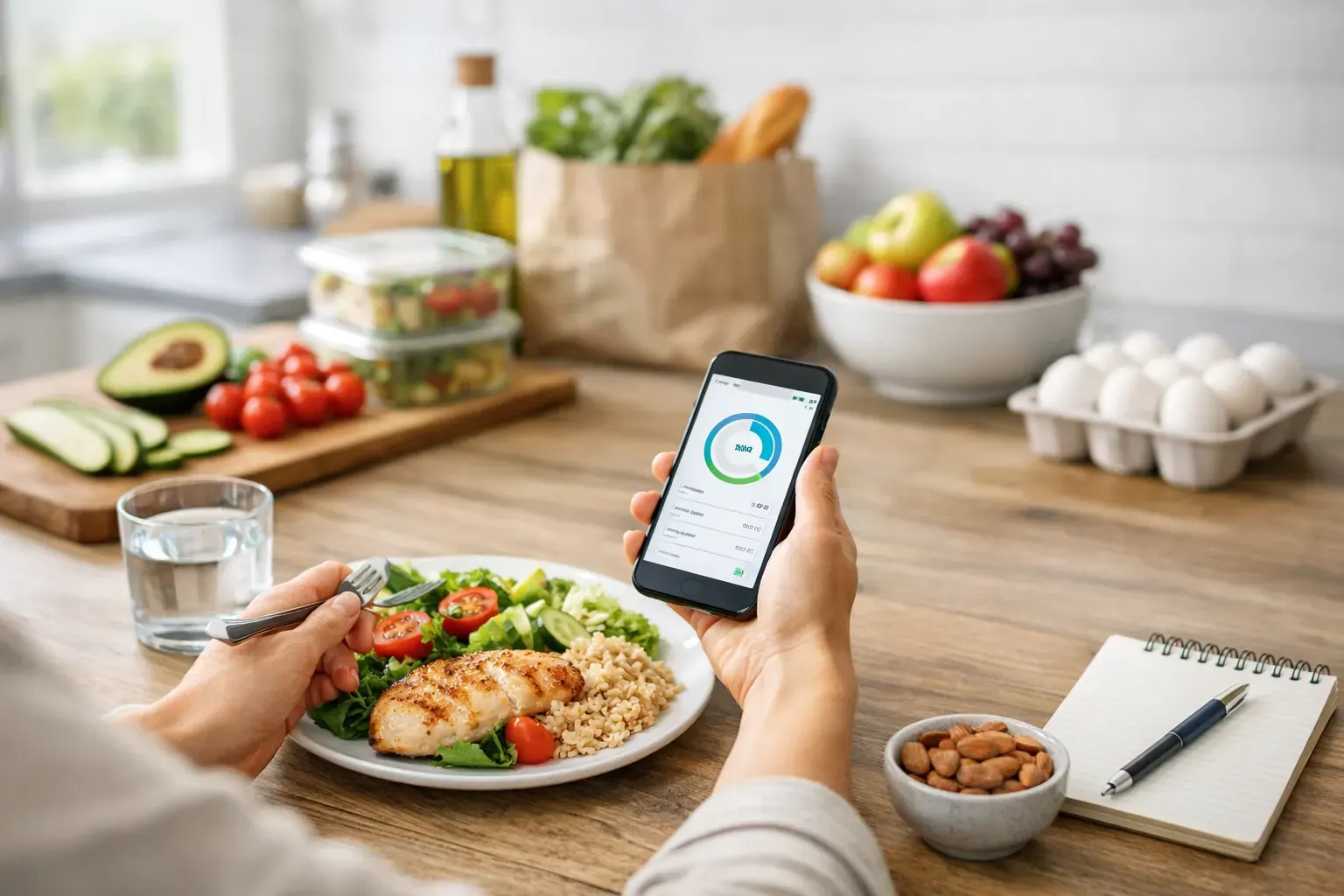
Most people do not give up on calorie tracking because they lack motivation. They give up because the process is annoying. If you are searching for the best calorie tracker, you are probably not looking for more nutrition theory. You want something that helps you log food quickly, stay within a realistic daily budget and keep moving without turning every meal into admin.
That is the real test. A calorie tracker should not just store numbers. It should make decisions easier at the moments that matter - breakfast on a busy workday, a meal deal at lunch, takeaway on a Friday night, and the quiet point in the evening when you want to know whether you are still on track.
What makes the best calorie tracker?
The best calorie tracker is the one you will actually use when life is busy, imperfect and repetitive. Accuracy matters, but usability matters first. If an app is technically detailed yet painful to use, most people stop logging after the first burst of motivation.
A better approach is to think in terms of control. Can you see your daily calorie target clearly? Can you log a meal in seconds rather than minutes? Can you plan ahead when you know the week will be hectic? Can you review patterns without needing a spreadsheet and a free evening?
For most people, the strongest calorie trackers do five things well. They make logging fast, reduce manual entry, help with meal planning, show progress clearly and keep the whole experience calm rather than punishing. That last part is easy to overlook, but it matters. Shame is not a useful long-term feature.
The best calorie tracker should reduce friction
If every meal needs to be typed out ingredient by ingredient, the habit becomes expensive in time and attention. That is usually where people drift off. The better option is a tracker that cuts steps wherever possible.
Photo logging is one of the clearest examples. Snapping your meal is quicker than searching a database from scratch, especially when you are eating mixed dishes or cooking at home. Barcode scanning matters too, because packaged foods are part of ordinary life. You should be able to scan, confirm and move on.
This is also where the budgeting model works well. When calories are framed as a daily spending allowance, the numbers become easier to use. You are not trying to be perfect. You are managing a budget. Spend more at one meal and you know what is left. Keep some calories in reserve and dinner becomes easier to handle. It feels practical, not moral.
Why simple budgeting beats rigid dieting
Many tracking apps make the experience feel heavier than it needs to be. They can be full of charts, labels and targets, yet still leave you unsure what to do next. A clear calorie budget is different. It gives structure without drama.
That matters for beginners, but it also matters for people who have tracked before and burned out. If your previous app made you feel as though one unplanned meal had ruined the day, you were not using a supportive system. The best calorie tracker should help you recover quickly. One higher-calorie lunch is just a larger transaction, not a failure.
This is especially useful when your week is uneven. Maybe Monday to Thursday are fairly routine, then dinner out arrives on Saturday. A budgeting mindset helps you zoom out and stay measured. You are managing intake over time, not trying to win every single meal.
Features that genuinely help you stay consistent
Some app features sound clever but change very little in real life. Others save your tracking habit.
Fast food capture is near the top of the list. If you can photograph meals, scan barcodes and pull from your recent food history, logging becomes something you can keep doing even when you are tired. A calendar view is more useful than it sounds as well. Looking back over days and weeks helps you spot where your calories creep up, which meals keep you fuller and where your habits are strongest.
Meal planning is another feature that separates a decent app from one that actively helps you. Tracking after the fact is helpful, but planning ahead is often what creates the deficit in the first place. A simple 7-day plan can remove a surprising amount of decision fatigue. Instead of asking what to eat every evening, you already have a workable answer.
Recipe generation based on ingredients can help in a more practical way than generic healthy eating advice. If you have chicken, rice and peppers in the fridge, you need a realistic meal idea, not a lecture. The best tools turn what you already have into an option that fits your budget.
Exportable reports are not essential for everyone, but they can be useful if you like tangible progress or want to share records with a coach or clinician. Clear reporting turns your effort into something visible, which often helps motivation hold up over time.
Best calorie tracker for iPhone users
For iPhone users, speed and interface quality matter more than ever. You are likely logging between meetings, on the train, in the kitchen or while queueing for coffee. A clunky app gets ignored. A clean mobile-first app gets used.
That means the best calorie tracker for this audience should feel built for the phone rather than squeezed onto it. Camera features need to work quickly. Navigation should be obvious. Your calorie budget should be visible without tapping through layers of menus. Small gains in convenience add up because tracking is a daily behaviour.
This is where Calorie Bank Credit stands out. It treats calorie intake like a spending budget, which makes weight management easier to understand and easier to stick with. You can snap meals, scan barcodes, generate a weekly plan and review your food history in a format that feels more like managing your daily balance than following a punishing diet.
When the best calorie tracker might not be the same for everyone
There is no single perfect app for every person. It depends on what usually makes you stop.
If you already understand calories but hate the time cost, speed should be your top priority. If you can log quickly, you will keep the habit. If your issue is inconsistency with meals, planning tools may matter more than advanced nutrient detail. If you are highly data-driven, reporting and trend views might be more valuable than recipe ideas.
It also depends on how you like to think about progress. Some people respond well to detailed macro breakdowns. Others do better with a simpler daily allowance and a clear running total. Neither is automatically better. The best calorie tracker is the one that matches how your brain makes everyday food decisions.
How to choose the best calorie tracker for your routine
Start with one honest question: what part of tracking usually breaks first?
If it is logging speed, choose an app with photo recognition, barcode scanning and recent meal history. If it is planning, choose one that can build a realistic week of meals without a lot of manual setup. If it is motivation, choose one that shows progress clearly and keeps the language encouraging rather than extreme.
Also pay attention to whether the app helps after a less-than-perfect day. A good tracker should make it easy to reset at the next meal. It should support consistency, not all-or-nothing thinking.
Finally, look for clarity. Your daily target should be obvious. Your remaining calories should be easy to read. Your previous meals should be simple to review. The more mental effort an app demands, the less likely you are to use it for months rather than days.
A calorie tracker should feel like a smart daily companion, not another task on your list. When the system is quick, clear and built around real life, staying in a sustainable deficit becomes far less complicated. Pick the tool that helps you log fast, plan simply and keep your budget in view - then let consistency do the heavy lifting.