
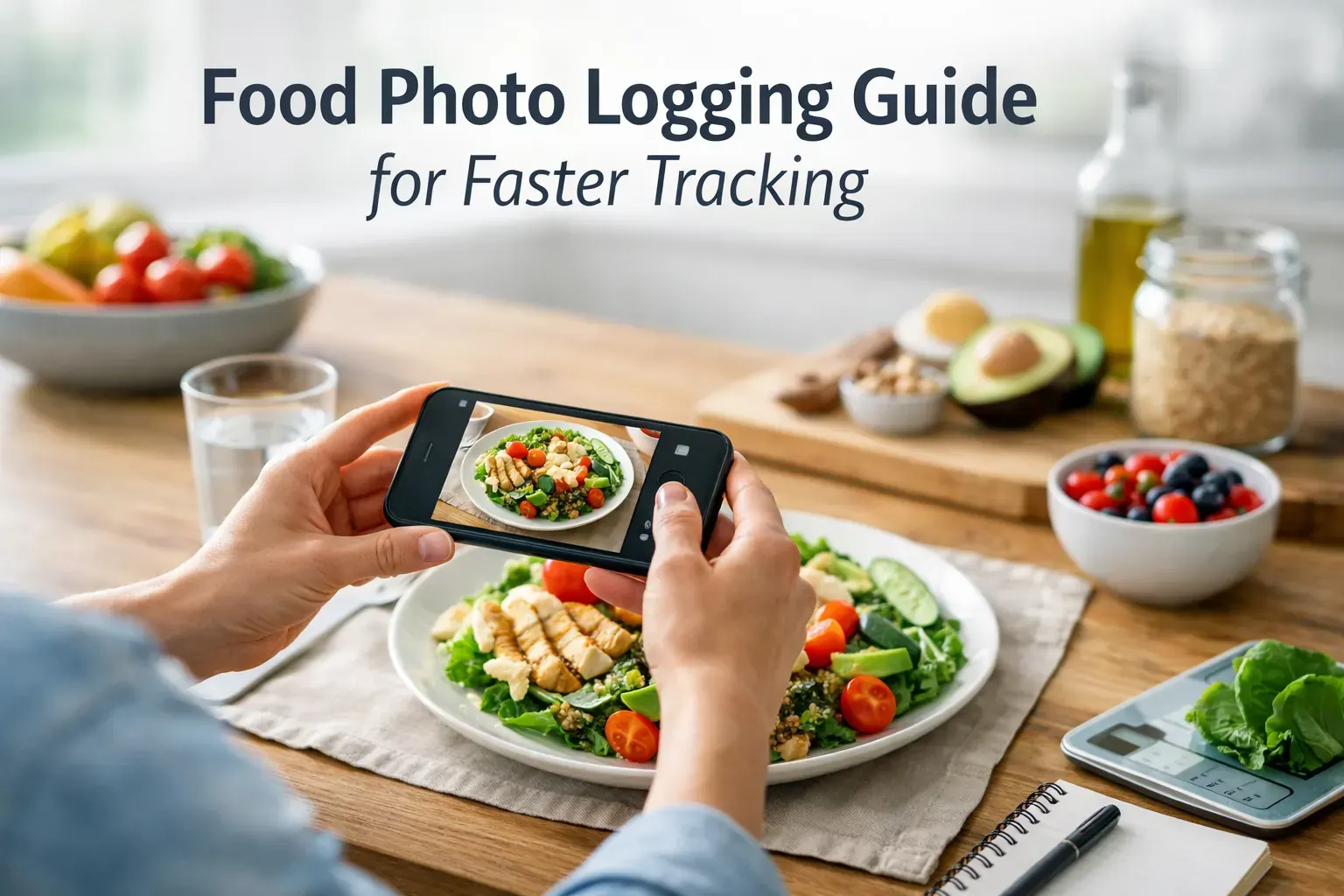
Most people do not stop tracking because they lack motivation. They stop because logging lunch at 2.15 pm between meetings, errands and messages feels like admin. That is exactly where a food photo logging guide helps. If you can snap your meal in seconds and keep your calorie budget up to date without typing every ingredient, tracking becomes easier to repeat.
Photo logging works best when you treat it as a daily control habit, not a perfect record of every gram. The goal is not to build a museum of your meals. The goal is to make fast, accurate-enough decisions so you can stay aware of what you have spent, what you have left, and how your day is shaping up.
Why a food photo logging guide works
Traditional food diaries often fail for one simple reason: they ask for too much effort at the wrong moment. When you are hungry, busy or eating out, you are less likely to search databases, guess portion sizes and manually build a meal from scratch. A photo reduces that friction.
You see the meal, capture it, and create a record immediately. That one action is powerful because memory is unreliable. People forget the biscuit with coffee, the extra drizzle of dressing, or the second handful of crisps while making dinner. A photo gives you a time-stamped checkpoint before the details blur.
There is also a behaviour benefit. Snapping a meal creates a pause. Not a guilt trip, and not a diet lecture. Just a quick moment of awareness. That pause often improves choices without needing extreme rules. You start noticing patterns such as oversized portions at lunch, liquid calories in the afternoon, or late-night snacking that keeps pushing you over budget.
How to log food photos well without wasting time
The best system is the one you can repeat on a normal Wednesday. That means fast inputs, clear routines and no perfectionism.
Start by taking the photo before your first bite. It sounds obvious, but this is where consistency is won or lost. A clean pre-meal photo is easier to identify than a half-eaten plate, and it stops the common problem of saying you will log it later and never getting round to it.
Keep the image simple. You do not need flattering lighting or an overhead restaurant-style shot. Just make sure the full meal is visible. If there are multiple items, get them all in frame, including drinks, sauces and sides. Those smaller add-ons are often where calories creep up.
Angle matters less than visibility, but a slight top-down view usually works well because it shows portion size more clearly. If the meal is in packaging, scan the barcode instead of relying on a photo alone. Photos are strongest for meals you have plated, takeaway items without packaging, and mixed dishes where manual searching would take too long.
What to include in every photo log
A strong photo log is not only about the picture. It is about the context attached to it. If your app allows notes, add just enough information to improve accuracy. Think chicken wrap, chips and cola rather than a full essay.
Portion clues help as well. If you had two slices, a large bowl or an extra serving, note it. AI recognition is fast, but mixed meals still involve estimates. The more obvious the portion and the more complete the record, the better the calorie result tends to be.
This is where a budgeting mindset helps. You do not need forensic precision to make progress. You need consistency good enough to keep your daily calorie credit honest. If breakfast and lunch are logged quickly and sensibly, you are far more likely to make a better dinner decision than if you skip tracking until the evening and try to reconstruct the day from memory.
The trade-off: speed versus precision
Photo logging is quick, but it is not magic. A photo can identify common foods and estimate portions, yet some meals are harder than others. Curries, casseroles, smoothies, heavily dressed salads and homemade recipes with several oils or sauces can be difficult to assess from an image alone.
That does not mean photo logging fails. It means you should know when to use a second tool. For packaged foods, barcode scanning is usually more precise. For a recipe you cook often, saving the ingredients once may give you a better repeatable entry than relying on a fresh estimate every time. For restaurant meals, a photo may still be the fastest and most practical option, even if the number is approximate.
The useful question is not, is this perfect? It is, is this accurate enough to guide today’s choices? For most people trying to lose weight or maintain control, the answer is yes. Better fast tracking done daily beats precise tracking abandoned after four days.
Building a low-friction routine around food photos
The easiest way to stay consistent is to reduce decisions. Decide in advance that every meal gets logged before eating. If you wait until you feel like it, you will miss the moments that matter most.
Breakfast is usually the best place to lock in the habit because it happens in a more predictable setting. Once you have logged the first meal, the rest of the day often follows. It creates momentum, and your calorie budget stops feeling abstract. You can see what has already been spent and what remains.
Lunch is where photo logging really proves its value. Busy workdays are full of meals grabbed on the move, desk lunches and takeaways eaten between tasks. Taking a photo is quick enough to fit real life. You do not have to stop the day to stay accountable.
Dinner is where many people either recover the day or overspend it. If your earlier meals are already logged, dinner becomes easier to manage. You know whether you have room for a larger portion, a dessert or a drink. That turns calorie tracking from hindsight into planning.
Using a food photo logging guide with meal planning
Tracking works better when paired with planning. If you only log after eating, you can stay informed, but you may still feel reactive. When you combine food photos with a simple weekly meal plan, you get both awareness and control.
A plan sets the budget framework. Photo logging checks what actually happened. That combination is useful because real life always moves around. Meetings run late, takeaway happens, and someone brings pastries into the office. A plan keeps your week anchored, while photo logs show where adjustments are needed.
If your app can generate meal ideas or weekly structure, use that to reduce decision fatigue. Then use photo logging to track adherence. You do not need to eat perfectly to stay on course. You just need to see where you are spending more than expected and rebalance the next meal or the next day.
Common mistakes that make photo logging less useful
The biggest mistake is logging only the meals you feel good about. A salad gets photographed, but the biscuit tin, Friday pint or takeaway dessert somehow stays off the record. That creates false confidence and weakens the whole system.
Another issue is treating the photo as the final answer when the meal clearly needs extra context. A bowl of pasta with creamy sauce, chicken and garlic bread is not just pasta. A quick note prevents undercounting and makes future reviews far more useful.
There is also the problem of inconsistency on weekends. Many people track neatly Monday to Thursday, then stop when routines change. Yet weekends often contain the highest-calorie meals. If your goal is a sustainable deficit, those are exactly the meals worth capturing.
Reviewing your logs for better decisions
The real value of food photos is not only in the moment you take them. It is in what they reveal over time. When your meal history sits in a calendar view, patterns become harder to ignore.
You may notice that breakfasts are fine, but lunches out are draining your weekly budget. You may spot that portion sizes expand when you skip snacks earlier in the day. You may see that Fridays are not the issue on their own, but Fridays plus a loose Saturday are wiping out the week’s deficit.
This is where a smarter tracking tool earns its place. An app such as Calorie Bank Credit can make that process feel more like budget management than diet policing. You snap meals, scan packaged foods, review your history and adjust with less friction. That makes consistency more realistic, especially if you are trying to lose weight without turning food logging into a second job.
Photo logs are also useful for progress conversations with yourself. If your results stall, you do not need to guess. You have evidence. You can review what changed, where spending drifted, and which habits are worth tightening.
A good food photo logging guide is not about taking better pictures. It is about making calorie awareness fast enough to fit your life. Keep it simple, log before you eat, add context when needed, and use the record to steer the next choice rather than judge the last one. That is how small daily inputs turn into steady control.