
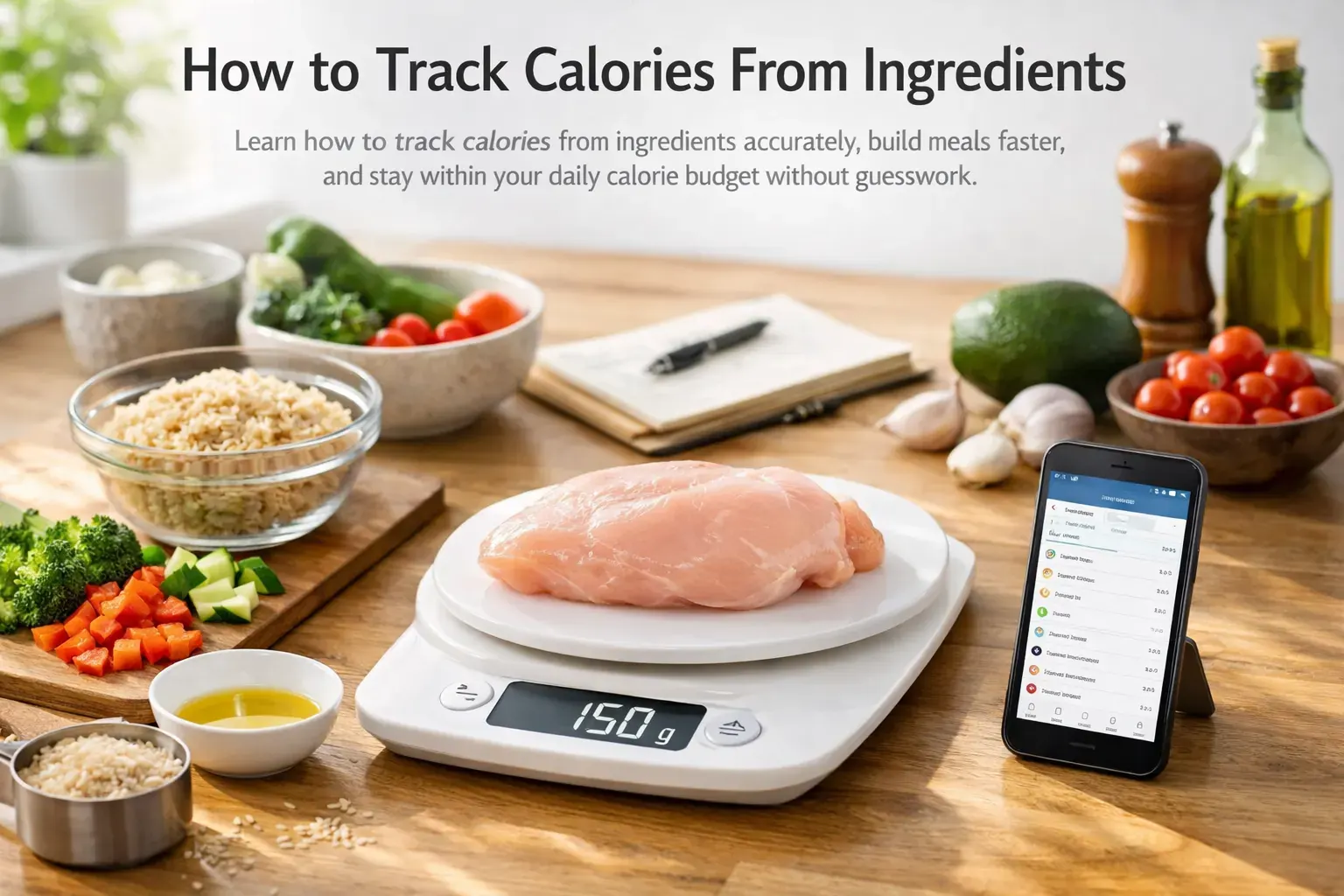
Cooking at home should make calorie tracking easier, not more annoying. Yet plenty of people hit the same wall: they can track a packaged sandwich in seconds, then lose ten minutes trying to track calories from ingredients in a homemade pasta, curry or breakfast bowl.
The good news is that ingredient-based tracking is usually simpler than it looks. You do not need chef-level precision or a spreadsheet habit. You just need a repeatable way to log what went into the pan, what changed during cooking, and how much ended up on your plate. Once that process is clear, homemade meals become one of the easiest ways to stay in control of your daily calorie budget.
Why ingredient tracking works better than guessing
When you estimate a homemade meal by searching for something vague like “chicken stir-fry” or “lasagne”, you are relying on someone else’s portion size, oil use and ingredient choices. That can be close enough sometimes, but it can also throw your numbers off by a few hundred calories.
Tracking from ingredients gives you tighter control. If you used 10g of olive oil, 150g of chicken, 80g of rice and a handful of veg, you are working from what you actually ate rather than a generic database entry. For anyone trying to build a steady calorie deficit, that difference matters.
It also helps with consistency. Weight management tends to work best when your system is easy to repeat. Logging ingredients creates a reliable record of your regular meals, so the second and third time around, tracking gets much faster.
How to track calories from ingredients without overcomplicating it
The simplest method is to log each ingredient before or during cooking, then divide the finished dish into portions. That is the core system. The trick is knowing where accuracy matters most.
Start with the calorie-dense items. Oils, butter, sauces, cheese, nuts, pastry, rice, pasta and meat portions can shift the total quickly. Vegetables still count, but if your mushrooms are a few grams off, it will not change much. If your oil is a few tablespoons off, it definitely will.
You also want to use weights where possible rather than vague measures. “One onion” is fine in a rush, but 120g of onion is more consistent. The same goes for cereal, oats, rice, pasta and spreads. A kitchen scale removes most of the guesswork in seconds.
If you are using an app, build the meal from ingredients once, save it, and reuse it. That turns a fiddly one-off job into a quick tap next time. This is where mobile-first tracking is especially useful. Snap meals, scan barcodes, build a sustainable deficit - without turning dinner into admin.
The three numbers that matter most
To track homemade food properly, focus on three things: the weight of each ingredient, the total recipe calories, and the portion you actually ate.
Let’s say you make chilli. You add 500g lean mince, a tin of chopped tomatoes, kidney beans, onions, peppers and 15g of olive oil. Each ingredient has a calorie value. Add those together and you have the total recipe calories.
Then weigh the finished dish, or divide it into clear portions. If the whole pot comes to 1,600 calories and you eat a quarter, your portion is 400 calories. That is far more reliable than searching for “homemade chilli” and hoping the database matches your version.
This approach also works well for meal prep. If you batch-cook four lunches, you do the calculation once and get four clear entries. Less friction, better tracking, easier repeatability.
Track calories from ingredients in common home-cooked meals
Some meals are easier to track than others, but almost all of them follow the same logic.
With pasta dishes, the biggest variables are usually dry pasta, oil, cheese and creamy sauces. Weigh those carefully. Vegetables and tomatoes matter less calorie-wise, though they still belong in the log.
With curries, watch oil, coconut milk, cream, ghee and rice portions. These are often where a “healthy homemade curry” becomes a much heavier meal than expected.
With salads, the surprise is usually dressing, avocado, seeds and cheese. A bowl of leaves is light. A generous pour of dressing and a handful of extras can shift the total fast.
With baking, precision matters more. Cakes, muffins and pancakes are best tracked by entering the full recipe and dividing by slices or servings. If you eyeball portions, your numbers can drift.
Soups, stews and chillies are generally easier, because the full pot can be logged once and portioned out neatly. These are some of the best meals for people who want calorie control without daily hassle.
Raw vs cooked weights: where people get confused
One of the biggest sticking points is whether to log ingredients raw or cooked. The short answer is this: either can work, as long as you stay consistent and use the right database entry.
Rice, pasta and meat all change weight during cooking because they lose or absorb water. That changes the weight, not the calories. If you log 100g of dry rice, you should not then replace it with the cooked weight unless you are using a cooked rice entry.
For recipe tracking, raw weights are often easier because that is what you measure before cooking. For individual leftovers, cooked weights can be practical if the app clearly identifies them as cooked. The goal is not perfection. It is using the same method each time so your data stays useful.
The ingredients people forget to log
Most calorie tracking mistakes do not come from the chicken breast or the potatoes. They come from the little add-ons that feel too small to matter.
Cooking oil is the classic one. A splash in the pan can add more calories than a whole serving of veg. The same goes for butter on toast, mayonnaise in a sandwich, sugar in tea, peanut butter on a spoon, and “just a bit” of grated cheese.
Tastes while cooking count too. If you grabbed a few crisps while making lunch or finished the kids’ leftovers, that still belongs in the day’s total. No guilt, just accurate accounting. A budget only works when the spending is visible.
How to be accurate without becoming obsessive
There is a point where more precision stops being useful. If you are trying to weigh every herb leaf or count the calories in black coffee to the nearest decimal, you are adding effort without much return.
A better standard is practical accuracy. Weigh the foods that drive most of the calories. Be honest about extras. Save common recipes. Use estimates when you are out, and tighten things up when you are cooking at home.
If your goal is fat loss, the system needs to be sustainable enough to repeat on a busy Tuesday, not just on your most motivated Sunday. Fast logging beats perfect logging if perfect logging makes you quit.
Make ingredient tracking quicker over time
The first time you log a homemade meal, it takes longer. After that, it should speed up.
Save recipes you cook often. Reuse breakfast combinations. Keep portion sizes consistent when you can. Scan packaged ingredients instead of typing them manually. If you use an app with ingredient-based recipe building, lean on it. That is exactly the kind of job technology should handle.
This is where Calorie Bank Credit fits naturally for people who want control without friction. Instead of treating calories like punishment, it helps you treat them like a daily spending budget. That framing makes homemade meals easier to manage because you can see exactly how each ingredient affects the balance.
A high-oil pasta dish is not “bad”. It simply uses more of the day’s credit than a lighter version. That shift in mindset helps people make smarter decisions without the usual all-or-nothing diet spiral.
When exact ingredient tracking matters most
Not every meal needs maximum precision. If you are maintaining your weight and mostly eating similar foods each week, rough consistency may be enough.
Exact tracking matters more when progress has stalled, when you are just starting out, or when your meals are heavily homemade and calorie-dense. It also matters if you tend to underestimate extras. In those situations, ingredient-level logging can show where your budget is being overspent.
If you are eating a simple chicken salad, a close estimate may do. If you are cooking a creamy risotto with oil, butter, cheese and wine, exact ingredients will give you a much clearer picture.
That is the real point of calorie tracking. Not to create pressure, but to remove fog. When you know what is in the meal, you can adjust portions, swap ingredients, or plan the rest of the day with confidence.
Homemade food does not need to be a blind spot. Once you track calories from ingredients a few times, it becomes less of a chore and more of a quick check on where your budget stands. Keep it simple, stay consistent, and let the data help you make calm decisions meal by meal.