
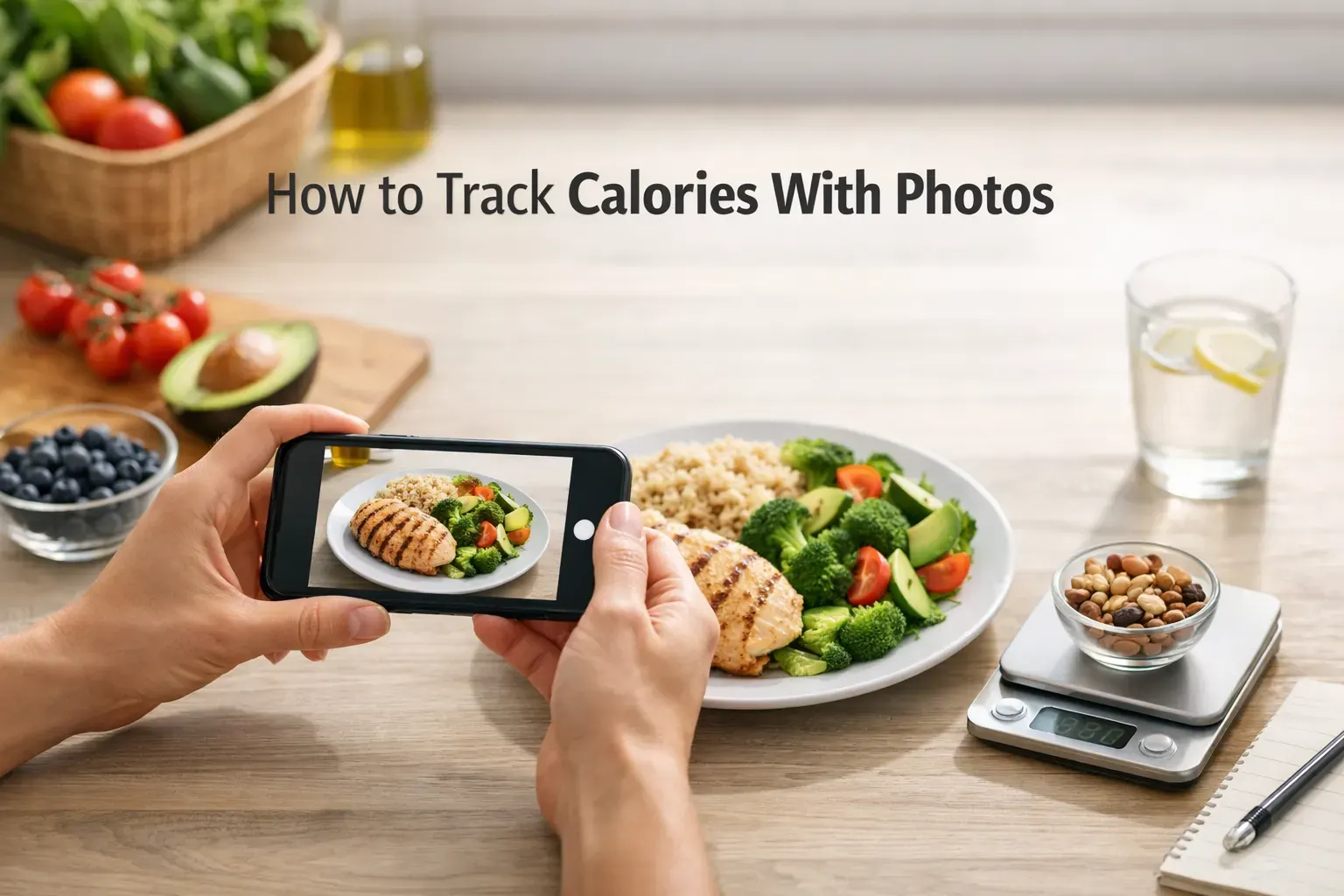
You do not need another food diary that turns lunch into admin. If you want to know how to track calories with photos, the real win is speed: snap the meal, get a usable estimate, and keep moving. That matters because the easier logging feels, the more likely you are to stay consistent enough to see progress.
Photo-based calorie tracking works best when you treat it like daily budgeting, not a test of perfection. A quick image can capture most of what matters in the moment - what you ate, roughly how much, and whether it fits your calorie budget. For busy people, that is often the difference between tracking for three days and tracking for three months.
How to track calories with photos without overthinking it
The basic process is simple. Before you eat, take a clear photo of your meal in good light. Let your app identify the foods, estimate portion sizes, and suggest calories. Then check the result quickly, make any obvious edits, and log it.
That sounds almost too easy, but there is a reason it works. Most tracking failures come from friction. Typing ingredients one by one, searching endless food database entries, or trying to remember what you had at 8 pm all drain motivation. A photo cuts out most of that effort.
It also creates a better record than memory alone. If you forget to log straight away, you still have the image in your camera roll. That gives you a second chance to stay accurate instead of writing the whole day off.
What photo calorie tracking is actually good at
Photo tracking is strongest when you need fast, good-enough logging for real meals. Think breakfast at home, a meal deal at your desk, dinner out, or leftovers that are hard to describe in a search bar. A photo can recognise common foods, estimate portions, and get you close enough to protect your daily deficit.
That is the key point: close enough is often enough. If your goal is fat loss or calorie control, consistency beats tiny bursts of perfection. Logging 90% accurately every day usually helps more than logging 100% accurately twice a week.
This is also why the finance-style framing helps. You are not trying to produce an academic nutrition report every time you eat. You are checking whether a meal fits your daily spending limit. Once that clicks, photo logging feels less like homework and more like a quick account check.
How to get better calorie estimates from a photo
Not all meal photos are equally useful. If you want the app to do a strong job, give it a photo that clearly shows the food. Natural light helps. So does taking the picture from above or at a slight angle, with the full plate in view.
Messy backgrounds can make recognition harder, especially if the food blends into the table or packaging. A simple frame helps the app separate the meal from everything else. If there are multiple items, try to show them distinctly rather than stacked into one unclear pile.
Portion size is where most calorie mistakes happen. If possible, include something that gives scale, such as the plate, bowl, or standard cutlery. You do not need to stage the meal like a magazine shoot. You just want a clear enough image that the difference between a small pasta portion and a large one is visible.
Drinks, oils, dressings and sauces deserve extra attention. They are easy to miss in a photo and they can shift the calorie total more than people expect. If your salad has a generous pour of dressing or your coffee includes syrup, add that manually if the app does not catch it.
When photo logging needs a manual check
Photo tracking is convenient, but it is not magic. Some meals are simply harder to estimate from an image alone. Mixed dishes, buffets, curries, casseroles, burritos and restaurant meals with hidden oils or butter can all be trickier than they look.
That does not mean photo logging fails in those moments. It means the smart move is to treat the first estimate as a draft. Review the recognised foods, adjust portions if needed, and use any extra tools available, such as barcode scanning for packaged items or recipe breakdowns for home cooking.
This is where a combined workflow is strongest. Snap the meal for speed, then refine only where it matters. If the app correctly spots chicken, rice and vegetables, you may only need to adjust the oil or sauce. That takes seconds, not minutes.
How to track calories with photos when you cook at home
Home cooking can either be very easy to log or strangely awkward, depending on the dish. If you make simple meals with clear components, a photo works well. If you cook one-pot meals or batch recipes, pair the photo with ingredients already entered in the app.
A useful habit is to think in two stages. First, log the recipe or the main ingredients when you cook. Then use the photo at serving time to record the actual portion you ate. That gives you more control over calorie accuracy without turning dinner into paperwork.
This approach also helps with meal planning. If you already know what is in the fridge and what your recipes roughly cost in calorie terms, you can build a week that stays inside your target more easily. Less guesswork means fewer end-of-day surprises.
Eating out: where photos save the day
Restaurants are one of the biggest reasons people stop tracking. Portions are less predictable, ingredients are less visible, and no one wants to spend ten minutes searching databases at the table. A quick photo solves part of that problem immediately.
You capture the meal before the details disappear. Later, the app can identify the likely components and give you a working estimate. Is it perfect? Not always. But it is far better than shrugging and deciding the meal does not count.
If you eat out often, the goal is not forensic precision. It is damage control and awareness. A rough estimate keeps the meal inside your budget thinking. That makes it easier to adjust the rest of the day, or simply notice patterns across the week.
Why photo tracking helps people stay consistent
The best tracking method is the one you will actually use when life is busy. Photo logging suits that reality because it reduces effort at the exact moment motivation is weakest. You do not need to remember every ingredient, spell every brand name correctly, or build every meal from scratch.
There is also less guilt built into the process. If you have a higher-calorie meal, you can still log it quickly and move on. That matters. People often fall off track not because one meal was too big, but because they avoid recording it and then abandon the day.
A fast photo-first habit keeps accountability light but visible. You stay honest without turning food into a moral issue. For many people, that is what finally makes tracking sustainable.
Build a workflow that takes less than a minute
A practical routine looks like this: snap the meal, review the estimate, scan any packaged extras, and save it to your food history. If you are planning ahead, use your recent meals to shape the rest of the day or even the next seven days.
That is where an app such as Calorie Bank Credit fits naturally. It turns logging into a straightforward budget check - spend, track, adjust. The photo does the heavy lifting upfront, while features such as barcode scans, meal planning and history make the rest of the week easier to manage.
You do not need to obsess over every crumb for this to work. You need a repeatable system that catches most meals with minimal effort. Over time, those quick entries add up to better awareness, better choices and a more reliable calorie deficit.
The trade-off: speed versus precision
There is always a balance between convenience and detail. Photo tracking gives you speed, which usually improves adherence. Manual entry can give you more precision, but often at the cost of time and consistency.
For most people, the smart answer is not choosing one or the other. It is using photo logging as the default, then tightening up only for meals that are calorie-dense, highly mixed, or especially important to your goals. That keeps the system practical.
If your estimate is occasionally off by a small amount, but you log every day, you are still in a far stronger position than someone chasing perfect numbers and giving up by Thursday. Progress is built on repeatable habits, not ideal conditions.
Start with one simple rule: if you are about to eat, take the photo first. That single habit creates a record, reduces skipped logs, and makes calorie tracking feel manageable enough to keep going tomorrow.