
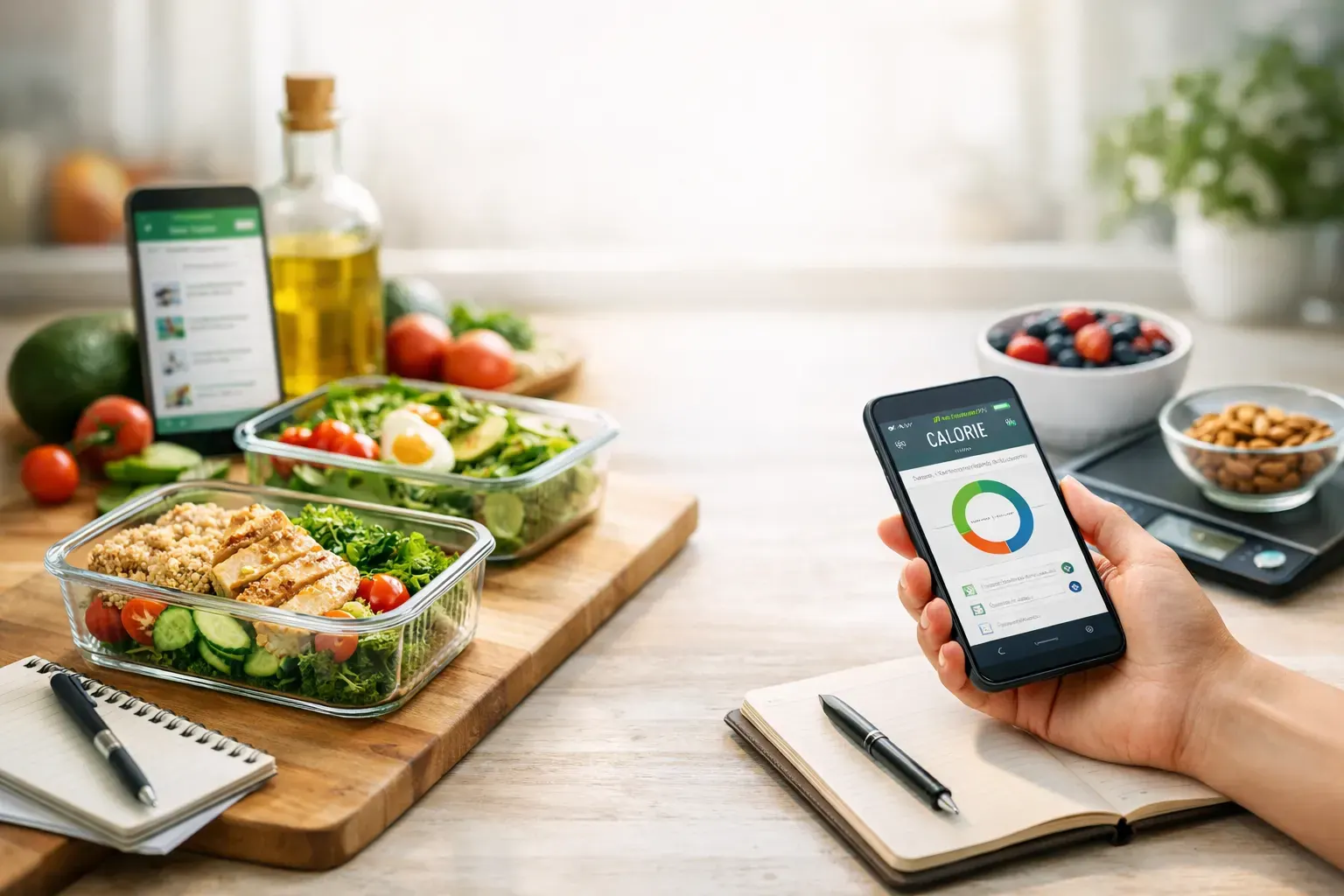
If your week tends to go off course around 3 pm on a busy Wednesday, the meal planning app vs tracker question is less about features and more about damage control. Do you need a tool that tells you what to eat before hunger makes the decision for you, or one that helps you log what you already ate and keep your calorie budget in check?
For most people, the honest answer is not ideological. It is practical. Some days you need a plan. Other days you need accountability. The right app depends on whether your biggest problem is making food decisions too late, or losing visibility once the day gets busy.
Meal planning app vs tracker: the real difference
A meal planning app is designed to help you decide in advance. It usually suggests meals, structures your week, helps you build shopping lists, and reduces the mental load of figuring out breakfast, lunch, and dinner every day. It is strongest before you eat.
A tracker works after or during the decision. It logs meals, counts calories, records trends, and shows whether you are staying near your target. It is strongest when you want clarity on what actually happened, not what was supposed to happen.
That difference matters because weight management usually breaks down in one of two places. Either there was no plan, so convenience took over, or there was no tracking, so portions and extras quietly pushed intake above target.
If you have ever started the day with good intentions and ended it wondering where the calories went, a tracker solves a visibility problem. If you regularly open the fridge with no idea what to cook and order something because it is easier, a planning app solves a decision problem.
When a meal planning app is the better choice
Meal planning apps suit people who are not short on motivation but are short on time. If your weekdays are packed, planning ahead removes repeat decisions and helps you avoid the usual expensive calorie spend on takeaway lunches, impulse snacks, and last-minute dinners.
They are especially useful if you want more structure without thinking about nutrition all day. A solid planner can generate a seven-day approach, suggest meals based on ingredients you already have, and make the week feel manageable before it starts. That matters when consistency is your goal.
Planning tools also help if you get decision fatigue. Many people do not overeat because they lack knowledge. They overeat because they reach the end of a long day and choose whatever is fastest. A plan lowers the odds of that happening.
There is a trade-off, though. Meal plans can look tidy on Sunday and become unrealistic by Thursday. Social plans change. Work runs late. You fancy something different. If the app is too rigid, you stop using it. A planning tool only works if it can bend with real life.
Best fit for planners
A meal planning app tends to fit busy professionals, beginners who want guidance, and anyone who shops and cooks in batches. It also suits people who want to reduce food waste, repeat successful meals, and spend less time deciding what comes next.
When a tracker is the better choice
A tracker is often the stronger option if your main goal is a sustainable calorie deficit. It gives you a running account of your intake, which is useful because memory is unreliable and portion sizes are easy to underestimate.
Good tracking is not about punishment. It is about control. If you can see what you have spent from your daily calorie budget, it becomes easier to adjust before the day gets away from you. That is far more practical than trying to be perfect.
Trackers are also valuable if your eating pattern is less predictable. Maybe you eat out often, grab food between meetings, or rotate between home cooking and supermarket convenience meals. In those cases, logging what you actually eat is often more realistic than trying to follow a tightly planned menu.
The downside is friction. If tracking takes too long, people quit. Manual search, endless brand variations, and slow entry can turn a useful habit into admin. That is why speed matters so much. Features like photo logging, barcode scanning, and one-tap history are not gimmicks. They keep the habit alive.
Best fit for trackers
A tracker tends to fit people who want measurable progress, flexible eating, and quick feedback. It is also better for anyone who already knows roughly what they like to eat but needs clearer boundaries around portions and total intake.
Why many people need both
This is where the meal planning app vs tracker debate gets more useful. In practice, planning and tracking solve different parts of the same problem.
Planning reduces future friction. Tracking reduces present drift.
If you plan your meals for the week, you remove guesswork. If you track those meals, you can see whether the plan matches reality. That combination is powerful because it lets you course-correct without shame. Maybe your lunches are fine, but dinners are larger than expected. Maybe your plan works Monday to Friday, but weekends wipe out the deficit. You cannot fix patterns you cannot see.
For many adults trying to lose weight, the sweet spot is a tool that combines both. You want to build a workable week, then log quickly enough that accountability does not become a chore. That is especially true if you are trying to stay in a calorie deficit while living a normal life, rather than following an extreme programme.
What to look for in a combined app
If you are choosing one app to handle both jobs, focus less on promises and more on daily usability. The best system is the one you can stick with on a rushed morning, during a supermarket shop, or when dinner changes at the last minute.
Start with speed. Can you snap a meal instead of typing every ingredient? Can you scan a barcode in seconds? Can you pull up previous meals from a calendar rather than starting from scratch? Convenience is not a luxury here. It is what turns intention into repetition.
Next, look at planning flexibility. A useful planner should help you map out a week without locking you into it. One-tap seven-day diet plans can be helpful, but only if they are easy to adjust. Recipe generation based on ingredients you already have is another practical advantage because it helps you use what is in the fridge instead of defaulting to something higher in calories and less satisfying.
Then consider reporting. If an app can show food history clearly and export a PDF report, it becomes easier to review your habits properly. That is useful for your own accountability, and for anyone who wants a cleaner record of progress over time.
A good example of this combined approach is Calorie Bank Credit, which frames calorie intake like a daily spending budget. That model is simple on purpose. Instead of treating eating well as a test of willpower, it gives you a clearer way to manage decisions, stay aware of your balance, and build a deficit you can actually maintain.
Which option works best for weight loss?
If weight loss is your main target, a tracker usually has the edge because a calorie deficit depends on intake awareness. You can eat healthy food, follow a decent meal plan, and still overshoot your target if portions creep up or extras go uncounted.
That said, planning makes the deficit easier to stick to. It is one thing to know your numbers. It is another to have a realistic lunch ready before you get hungry enough to buy whatever is nearby. Weight loss tends to work better when planning and tracking support each other.
So if you must choose only one, pick the tool that fixes your biggest leak first. If your issue is random eating and poor visibility, choose a tracker. If your issue is last-minute choices and inconsistent meals, choose a planning app. If both sound familiar, you will probably do better with a hybrid.
The most effective app is not the one with the longest feature list. It is the one that helps you make one good decision, then another, without turning food into a full-time job. Choose the tool that gives you more control with less friction, and the rest of the week usually gets easier.