
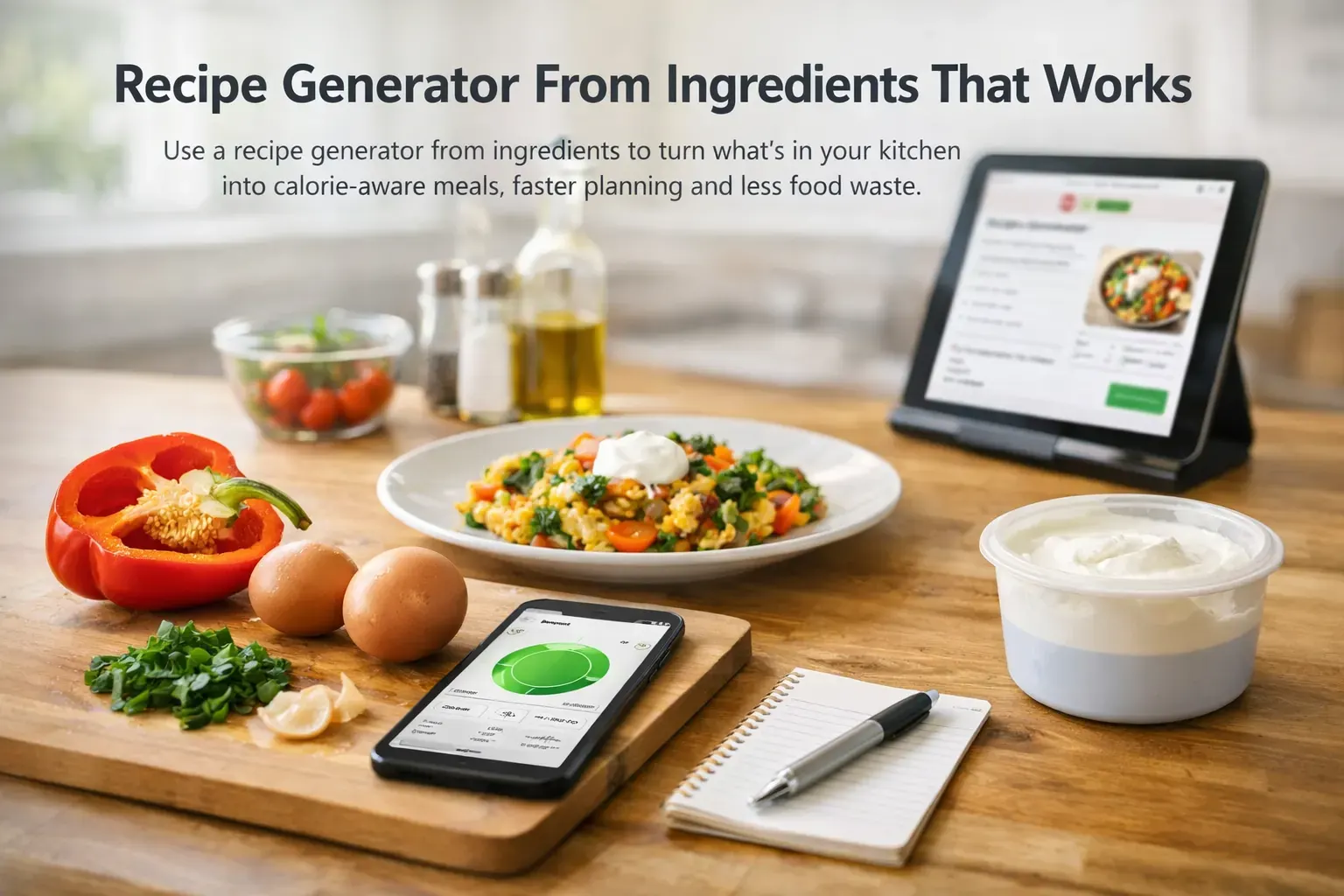
Half a pepper, two eggs, a tub of Greek yoghurt and no plan for dinner - that is exactly when a recipe generator from ingredients earns its keep. Instead of scrolling for ideas or ordering something that blows your calorie budget, you can turn what you already have into a meal that fits your day.
That matters more than most people think. The hardest part of eating well is rarely nutrition knowledge. It is the 6.30 pm decision when you are tired, hungry and working with whatever is left in the fridge. If your meal planning tool can bridge that gap quickly, you are far more likely to stay consistent.
What a recipe generator from ingredients actually helps with
At its best, this kind of tool does three jobs at once. First, it reduces friction by giving you usable meal ideas from the food you already own. Second, it cuts waste because random leftovers finally become part of a plan. Third, it helps you stay in control of calories without making every meal feel like admin.
That last point is where many people get stuck. Traditional recipe sites are great for inspiration, but not always for adherence. You may find a good-looking dinner, only to realise it needs six extra ingredients, takes an hour, or lands far outside your target intake. For someone trying to manage weight in a realistic way, that is not helpful. It is just another detour.
A good ingredient-based generator should feel closer to a budgeting tool than a cookbook. You enter what you have, set some boundaries, and get options you can actually afford in calorie terms as well as time and effort.
Why ingredient-based cooking is easier to stick to
People often assume successful calorie control starts with perfect meal prep. Sometimes it does. More often, it starts with making better decisions under ordinary conditions. A recipe generator from ingredients supports that because it works with real life, not ideal life.
If you shop loosely, cook for one, share meals with family, or simply forget to plan, ingredient-first meal ideas are more forgiving. You do not need a fridge full of specialist items. You need a system that can look at chicken, spinach, rice and a jar of passata and give you two or three sensible ways forward.
There is also a psychological benefit. When healthy eating feels flexible, it is easier to maintain. Restrictive plans often fail because one missing ingredient can knock out the whole meal. Flexible planning keeps you moving. That is a big difference between people who follow through for a week and people who build a repeatable habit.
The best recipe generator from ingredients is not just creative
Creativity is useful, but it is not enough. If you are managing your intake, the best recipe generator from ingredients should also be practical, calorie-aware and fast.
Practical means it suggests meals with ingredients you genuinely have, not a vague idea plus a shopping list. Calorie-aware means it helps you estimate portions and understand whether the meal fits your day. Fast means you can go from idea to decision in under a minute, because that is how people actually use these tools.
This is where feature design matters. A mobile-first app has an advantage because meal planning often happens in motion - standing in the kitchen, in a supermarket aisle, or between meetings. If the process takes too many taps, most people will abandon it and default to whatever is easiest.
An effective flow looks simple. Add or scan ingredients, generate a few meal options, choose one, and log it into your day. If the app can then carry that choice into your calorie tracking, even better. You are not juggling planning in one place and accountability in another.
How to use a recipe generator from ingredients well
The smartest users do not treat these tools like magic. They treat them like decision support.
Start with your anchor ingredients. These are usually the foods that matter most for satiety or calories - protein sources, carb bases and higher-calorie extras. Chicken, mince, salmon, pasta, rice, wraps, cheese, oil and sauces all change the maths of a meal. Enter those first. Vegetables, herbs and seasonings can fill in around them.
Next, be honest about your constraints. If you want a meal under a certain calorie level, say so. If you need something quick, make speed part of the brief. If you are trying to use up food before it spoils, prioritise those ingredients instead of building around what feels most exciting.
Then sense-check the result. A generated recipe may be workable but not ideal. Portions may need adjusting. A sauce may push calories higher than expected. A side dish may be optional rather than necessary. The tool should save time, but your judgement still matters.
That trade-off is worth being clear about. More flexibility usually means less precision. If a generator creates a meal from broad inputs, the calorie estimate may be directionally useful rather than exact. For many people, that is still enough to make a better choice. If you need tighter control, weigh ingredients and log final portions once you cook.
Where these tools fit into calorie tracking
Planning and tracking work best together. On their own, recipe generators solve the question of what to cook. Combined with a calorie budgeting system, they solve the bigger question of what to cook that still fits the day.
That is a meaningful difference. If your breakfast and lunch have already used most of your calorie credit, dinner needs to be efficient. If you have more room left, you may prefer a larger portion or a richer option. The same ingredients can support both outcomes. A recipe generator becomes more useful when it understands context rather than just ingredients.
For example, eggs, mushrooms, spinach and cheddar could become a light omelette, a fuller frittata or a baked dish with toast on the side. All three are valid. The right one depends on the budget you have left and how hungry you actually are.
This is why a combined system feels easier to live with. You are not trying to be perfect. You are making informed swaps, keeping your day balanced and avoiding the common pattern of accidental overspending followed by guilt.
Common mistakes when using ingredient-based recipe tools
The biggest mistake is adding only the foods you feel good about. If oil, dressings, cheese and snack extras are likely to end up in the pan or on the plate, include them. Leaving them out may produce recipes that look lighter than the meal you will really eat.
The second mistake is expecting restaurant-level inspiration every time. Weeknight cooking has a job to do. It should be affordable, filling, reasonably enjoyable and aligned with your goals. Not every generated meal needs to be exciting. Some just need to work.
The third mistake is using the tool too late. If you wait until you are starving, even a fast app can feel slow. The better approach is to generate one or two dinner options earlier in the day, then choose the one that still suits your calorie balance by evening.
What to look for in an app-based recipe generator
If you are choosing a tool, keep your standards practical. The strongest option will let you generate meals from ingredients, log food quickly, and make calorie control feel simpler rather than stricter.
Photo logging helps when you need speed. Barcode scanning helps when packaged foods are part of the meal. Weekly planning matters if you want fewer last-minute decisions. A calendar view is useful because patterns become visible - when you cook more, when takeaways creep in, and which meals keep you satisfied without overspending.
One useful example of this approach is Calorie Bank Credit, which frames intake as a daily calorie budget rather than a punishment system. That makes ingredient-based meal generation feel more actionable. You are not asking, "What should I not eat?" You are asking, "What can I make from what I have that fits the budget?"
That is a healthier question for real life. It supports consistency, not extremes.
The real value is fewer bad defaults
Most people do not need more recipe content. They need fewer moments where the easiest option is the one that knocks them off track. A good recipe generator from ingredients helps close that gap. It turns leftovers into choices, choices into meals, and meals into something you can actually account for.
That does not mean every generated recipe will be perfect. Some will need tweaking. Some will be better for maintenance than fat loss. Some will suit a busy Tuesday but not a relaxed Sunday. But if the tool saves you from even a few expensive takeaway decisions each week - expensive in calories, money and momentum - it is doing valuable work.
The best food system is the one you will use when the fridge looks unpromising and your motivation is low. If a smarter prompt can help you cook what you already have and stay within your calorie budget, that is not a small upgrade. It is the sort of quiet advantage that keeps progress moving.