
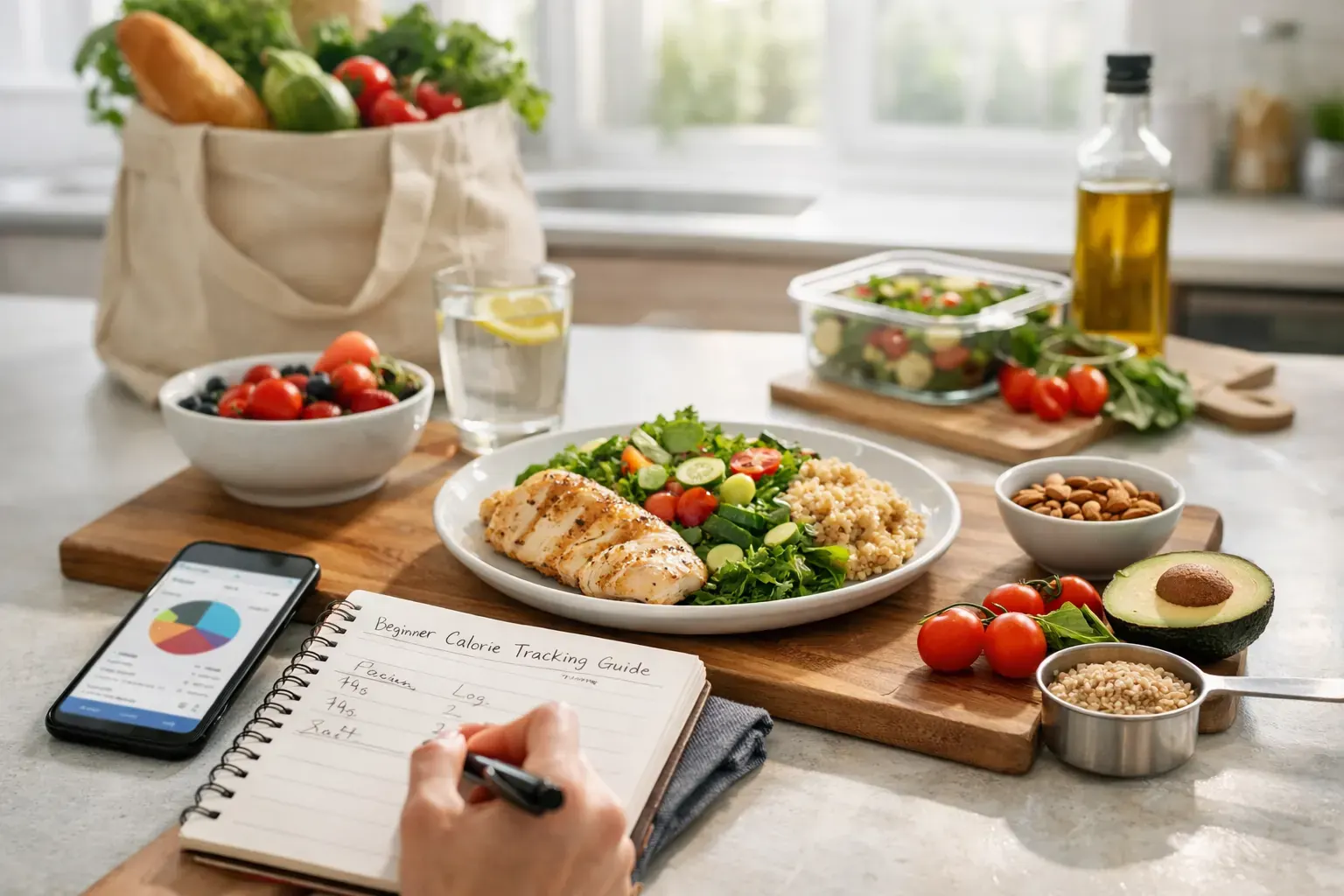
The fastest way to quit calorie tracking is to treat it like homework. Most beginners do not fail because they lack willpower. They fail because the process feels slow, fussy and far too easy to get wrong. A good beginner calorie tracking guide should make the day feel more manageable, not more restrictive.
If you are new to it, think less about dieting and more about budgeting. You have a daily calorie allowance, and every meal, snack and drink comes out of that balance. That shift matters. A budget gives you structure without turning one biscuit into a moral crisis.
Why this beginner calorie tracking guide starts with budgeting
People usually overcomplicate calorie tracking at the start. They hunt for the perfect macro split, obsess over one restaurant meal, or try to log every leaf of spinach with laboratory precision. In practice, the goal is simpler. You want to build awareness, create a sensible deficit if fat loss is the aim, and repeat the process long enough for it to work.
The budgeting approach helps because it gives calories a job. Instead of seeing tracking as a punishment, you start to see it as a daily spending plan. Breakfast, lunch, dinner and extras all need to fit. Some days you will spend more at lunch and keep dinner lighter. Other days you will save room for takeaway or drinks. That is normal. Control is more useful than perfection.
Set a realistic calorie target first
Before you log your first meal, you need a target that is firm enough to guide choices but realistic enough to keep for more than three days. If your target is too aggressive, the plan falls apart by Thursday. If it is too generous, progress may stall and motivation usually follows.
For most beginners, a modest calorie deficit is the right place to start. Not the biggest deficit you can tolerate. Just one that allows you to lose weight steadily while still eating like a normal person. Hunger, energy, training, work schedule and sleep all matter here. Someone with a desk job and irregular meals may need a different setup from someone who walks all day and cooks every evening.
This is also why your first target is not your forever target. Treat it like a working budget. Use it for a couple of weeks, track honestly, and then adjust if needed. Good tracking is built on useful numbers, not heroic ones.
How to track calories without making it your second job
The biggest win for beginners is reducing friction. If logging meals takes too long, you will stop doing it, especially on busy days when you need the most visibility.
Start by tracking what you actually eat now. Do not redesign your entire diet on day one. If breakfast is toast and yoghurt, log that. If lunch is a meal deal, log that. If dinner is pasta, log that too. Awareness comes before optimisation.
Speed matters more than elegance. Photo logging, barcode scanning and saved meals can cut out most of the tedious bits. That is where mobile-first tools earn their keep. Snap meals, scan packaged food, and move on. The easier it is to record real life, the more likely you are to stay consistent when work runs late or dinner is grabbed on the go.
Portion accuracy matters, but beginners often take this too far. You do not need to weigh every strawberry forever. You do need to avoid vague entries that hide the real numbers. A splash of olive oil, a handful of nuts, a creamy coffee, a generous serving of cereal - these small extras can quietly push you over budget. Aim to be reasonably accurate with calorie-dense foods and consistent with everything else.
The easiest way to stay on budget is to plan ahead
Tracking after every meal is helpful. Planning before meals is better. The people who find calorie tracking easiest are usually the ones who make fewer decisions in the moment.
That does not mean eating the same chicken salad every day. It means giving your future self a structure. If you know your evening meal will be larger, keep breakfast and lunch more efficient. If you have dinner out on Friday, save some flexibility earlier in the day. A simple seven-day meal plan can remove most of the guesswork before hunger gets involved.
Planning is especially useful for busy professionals who do not want to spend half the day thinking about food. A rough daily framework often works better than strict meal-by-meal rules. You might keep breakfast around one range, lunch around another, and leave a comfortable amount for dinner and snacks. That gives you room to live normally while still protecting your deficit.
Beginner calorie tracking guide to common mistakes
Most calorie tracking problems are not technical. They are behavioural. People either give up after one high-calorie day or they quietly stop logging the meals they do not like seeing.
The first mistake is treating tracking as pass or fail. If you go over budget at lunch, the day is not ruined. Log it anyway. Visibility is still valuable. One expensive day in a financial budget does not mean you bin your bank statement. The same logic applies here.
The second mistake is underestimating extras. Drinks, sauces, oils, nibbles while cooking and weekend treats can make a big difference. None of these foods are banned, but they do need a place in the budget.
The third mistake is changing too much at once. If you start calorie tracking, cut out all favourite foods, begin meal prepping twice a week and start an intense gym routine in the same breath, adherence usually cracks. Build one reliable habit first. Then tighten the system.
The fourth mistake is expecting daily scale changes to tell the full story. Weight can bounce around because of salt, carbohydrates, hormones, stress and digestion. That is why calendar-based food history and longer trend views are useful. They show whether your habits are lining up over time, which matters more than one random Tuesday weigh-in.
Use app features that save time, not just collect data
A lot of tracking tools look impressive but create more admin than progress. As a beginner, the best features are the ones that reduce effort and improve decision-making.
Barcode scanning helps when you eat packaged foods and want quick, cleaner entries. Photo recognition helps when meals are mixed or homemade and you do not fancy typing every ingredient manually. Recipe generation can help when the fridge is full of random ingredients and takeaway feels easier. Weekly planning is useful when your work diary is packed and you need food sorted before the week runs away from you.
Reporting tools can also help more than people expect. Seeing your intake history, meal patterns and consistency in a clear format gives you something objective to work from. If your weekends are regularly blowing the budget, that is not failure. It is information. If lunches are too small and leading to evening snacking, that is useful too. Calorie Bank Credit uses this budgeting model well because it turns the whole process into something easier to read and easier to stick with.
What to do when life is not trackable
Some days will not fit neatly into your plan. There will be restaurant meals, birthdays, office biscuits, long train journeys and evenings when you are too tired to care. A useful system needs to survive those days as well.
When exact tracking is difficult, estimate rather than abandon the day. Pick the closest match, err slightly on the higher side, and carry on. One imperfect entry keeps the habit alive better than a blank space. You are not trying to produce a scientific paper. You are trying to stay aware and make the next decision better.
It also helps to think in weekly patterns rather than isolated meals. If Saturday dinner is heavier, your overall week can still work. Consistency is about the direction of travel, not a spotless record.
When to adjust your calorie budget
Give your plan enough time to tell the truth. If you have tracked honestly for two to three weeks and your trend is not moving in the direction you want, then review it. That might mean reducing calories slightly, improving logging accuracy, or planning meals more tightly during your problem times.
It might also mean the opposite. If you are constantly hungry, losing control at night, or thinking about food all day, your budget may be too tight. A plan you can follow beats a perfect one you resent.
The best beginner setup is the one you can repeat on ordinary days. Not holidays. Not Mondays fuelled by motivation. Ordinary workdays, normal weekends, and the occasional messy evening when dinner is later than planned.
Start simple, keep the log honest, and let the numbers guide you rather than judge you. When tracking feels less like punishment and more like daily money management, it becomes much easier to stay steady long enough to see real change.