
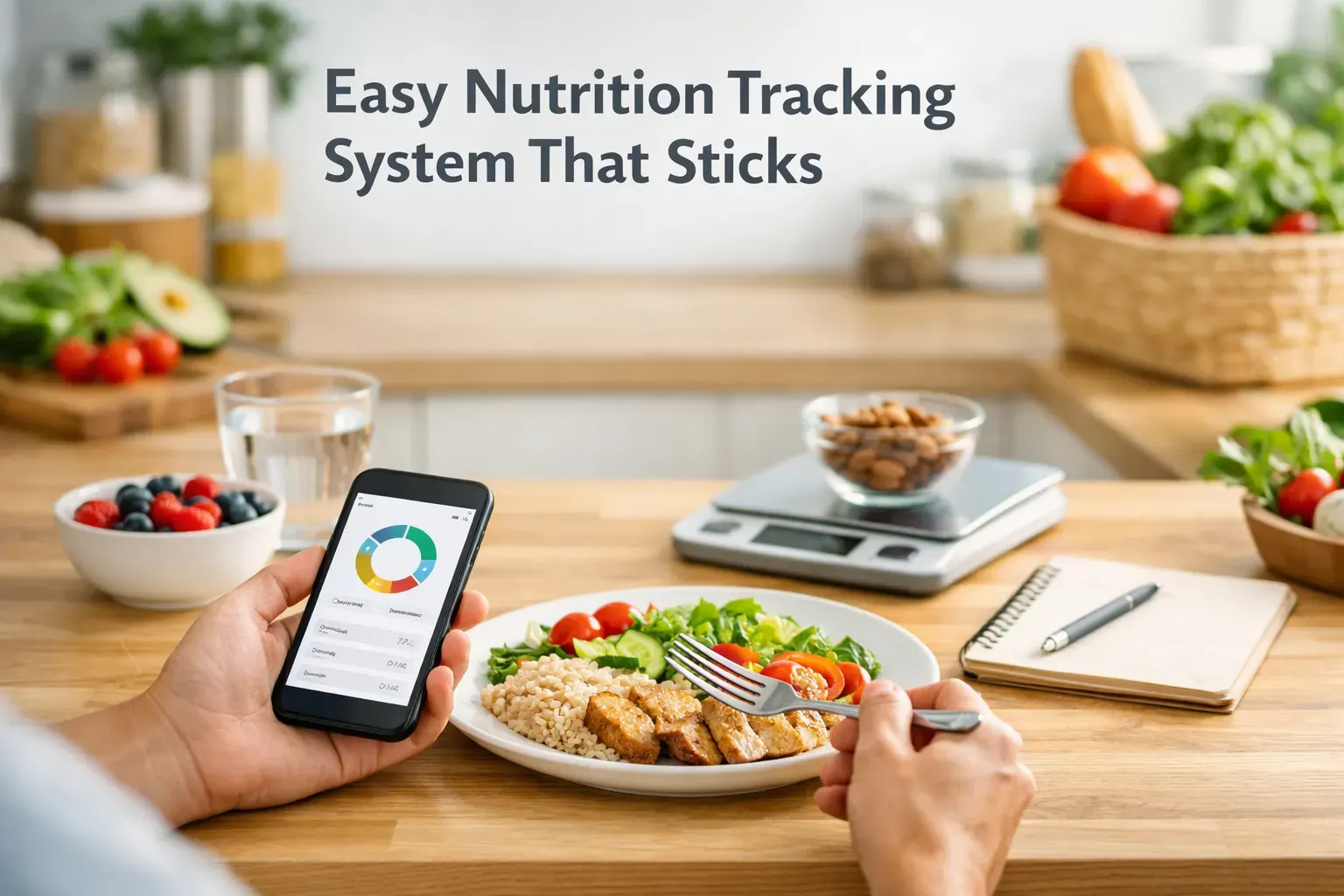
Most people do not quit calorie tracking because they lack motivation. They quit because the system asks too much of them. An easy nutrition tracking system works differently. It reduces decisions, speeds up logging, and gives you a clear daily number you can actually use.
That matters more than people think. If tracking feels like admin, it slips by Wednesday. If it feels like checking your budget, it becomes part of the day. The goal is not to build a perfect food diary. The goal is to stay aware enough to make better choices consistently.
What makes an easy nutrition tracking system work
The best system is not the most detailed one. It is the one you can repeat when work is busy, dinner is late, and your willpower is average. That usually means three things: quick logging, visible calorie control, and enough structure to stop guesswork.
Quick logging matters because friction is the real enemy. If every meal needs manual searching, portion maths, and double-checking labels, the process becomes tedious fast. A better setup lets you snap a meal, scan a barcode, or pull from recent foods in seconds.
Visible calorie control matters because numbers need context. A daily calorie target can feel abstract, but a spending-style budget is easier to understand. You know what you have available, what you have used, and how much room is left. That makes food decisions calmer and more practical.
Structure matters because most overeating happens before the meal is even logged. It happens when there is no plan, no fallback option, and no quick way to compare choices. A simple weekly plan, a shortlist of repeat meals, and a clear view of past intake reduce that drift.
Build your easy nutrition tracking system around fewer actions
A lot of people try to improve results by tracking more detail. In practice, better results often come from doing fewer things more reliably. Your system should feel light enough to use every day, even when the day is messy.
Start with one primary rule: log before or during eating, not hours later. Delayed tracking is where memory gets generous. A biscuit becomes one biscuit. A takeaway side somehow disappears. Real-time logging keeps your numbers honest without turning meals into homework.
Next, reduce the number of entry methods you rely on. You do not need five ways to log the same lunch. Pick the fastest options for your real routine. If you eat packaged foods during the week, barcode scanning should do most of the heavy lifting. If you cook at home, ingredient-based recipe generation saves time and improves consistency. If you eat out often, photo logging is usually the least disruptive option.
Then create a small bank of repeat meals. This is where tracking gets easier almost overnight. Breakfasts, work lunches, protein snacks, and two or three standard dinners remove a huge amount of daily decision-making. Repetition is not boring when it protects your time and your progress.
How to make calorie control feel manageable
People often struggle with tracking because the numbers feel punitive. If the app feels like it is catching you out, you will avoid opening it. A better approach frames calories as a daily budget. You are not being judged. You are managing a resource.
This shift matters because it supports better choices under pressure. If you know your breakfast and lunch have already used most of your daily allowance, dinner becomes a budgeting decision rather than an emotional one. You can adjust portions, swap a side, or keep dessert for another day without the drama that often comes with dieting.
There is a trade-off here. A budgeting model makes day-to-day control easier, but it still relies on reasonably accurate portions. If your estimates are always optimistic, the system loses value. That does not mean you need to weigh every grape forever. It means being a bit stricter with calorie-dense foods like oils, sauces, pastries, and takeaways, where small errors add up quickly.
For many people, this is the point where consistency beats precision. You do not need lab-level data. You need numbers that are close enough to guide better decisions over weeks, not just one meal.
An easy nutrition tracking system should include planning
Tracking after the fact is useful. Planning ahead is where things get easier.
A simple 7-day meal plan gives your calorie budget somewhere to go before hunger starts negotiating. It does not need to be rigid. In fact, the best plans leave room for work lunches, family meals, and the occasional spontaneous coffee and pastry. What matters is that the core of the week is decided in advance.
This is especially useful for busy professionals who default to convenience when the day runs long. If dinner is already mapped out, or at least narrowed down to two options, you are far less likely to overspend your calories on whatever is quickest.
Planning also improves your shopping. When ingredients match your intended meals, your fridge starts supporting your goal instead of competing with it. That sounds obvious, but it is one of the most overlooked parts of sustainable calorie control.
Use history to spot patterns, not to punish yourself
Food history is valuable when it helps you notice what is actually happening. It is not there to make you feel guilty about Friday night.
A calendar view of meals and intake can quickly show where your week tends to wobble. Maybe Mondays are fine but Thursdays go off track because lunch gets skipped. Maybe weekends are less about overeating and more about underestimating drinks and snacks. Once you can see the pattern, you can do something with it.
That is why reporting matters too. Exportable reports are useful if you want a cleaner view of your progress, or if you are sharing updates with a coach or healthcare professional. More importantly, they turn vague effort into visible evidence. You stop relying on feelings and start looking at trends.
It depends on your personality how often you should review data. Some people do better with a quick daily check-in. Others find that too intense and prefer a weekly review. If daily numbers make you overreact, zoom out. Weight management is a long game.
The best tools remove friction at the exact right moment
A good system helps most when your day is least convenient. That is where mobile-first tracking has a real advantage. If your phone is already with you, logging should take a few seconds, not a separate session later that you will forget.
Features like food photo recognition, barcode scanning, recipe generation, and saved meal history are not nice extras. They are what make adherence possible for people with normal schedules. The easier the action, the more likely you are to repeat it.
That is also why Calorie Bank Credit’s budgeting approach makes sense for many users. It takes something that often feels technical and turns it into a familiar daily habit. Spend, check balance, adjust. It is simple enough to use quickly, but structured enough to keep you accountable.
Still, no tool fixes a chaotic routine on its own. If your meals are completely random, your sleep is poor, and you are constantly playing catch-up, even the smartest tracker will feel harder to use. The app should support the habit, not replace it.
Keep the system simple enough to survive real life
The easiest mistake is making your plan too ambitious. You decide to track every nutrient, cook every meal from scratch, and maintain perfect consistency from day one. That usually lasts until life becomes inconvenient, which is to say not very long.
A better standard is this: can you keep using your system on a stressful Tuesday? Can you log a supermarket meal deal, a rushed sandwich, or a takeaway without feeling the day is ruined? If the answer is yes, your setup is practical.
That is the real test of an easy nutrition tracking system. Not whether it looks disciplined on paper, but whether it keeps working when life is ordinary. Most progress comes from boring consistency, not heroic effort.
Start with fast logging. Build a small meal bank. Treat calories like a budget, not a moral score. Review patterns without drama. When your system feels clear and manageable, staying on track stops feeling like a fight - and starts feeling like control.