
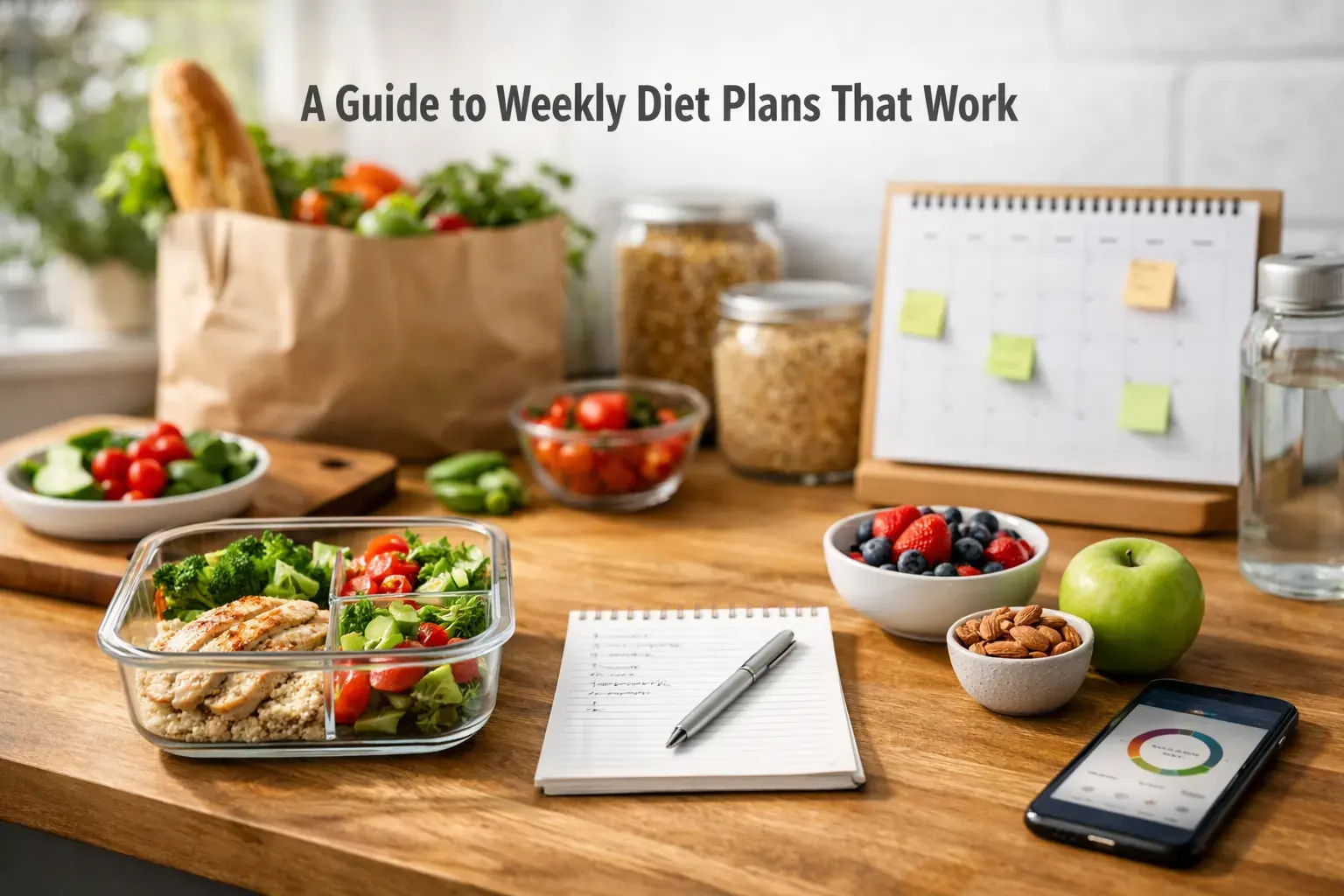
Monday usually goes well. By Thursday, lunch is whatever is quickest, dinner is a compromise, and the week starts to feel expensive - not just for your wallet, but for your calorie budget too. A good guide to weekly diet plans fixes that problem before it starts. It gives your food choices structure, keeps decisions simple, and makes it easier to stay in a sensible calorie deficit without turning every meal into a maths exercise.
The key is to stop treating meal planning like a perfect eating challenge. Weekly diet plans work best when they act more like a spending plan. You set your calorie budget, decide where you want to spend it, and leave enough flexibility for real life. That is how you stay consistent long enough to see progress.
What a guide to weekly diet plans should actually do
A useful plan is not a seven-day fantasy built for someone with unlimited time, a spotless fridge, and no social life. It should help you answer three practical questions: what am I eating, how much room does it take in my calorie budget, and how easy is it to repeat?
That matters because most people do not struggle with weight management due to lack of information. They struggle because decision fatigue creeps in. If breakfast changes every day, lunch depends on what is nearby, and dinner starts with an empty fridge at 7 pm, it is much harder to maintain control.
A strong weekly plan reduces those friction points. It gives you repeatable meals, clearer portions, and fewer moments where hunger makes the decision for you. It also helps you spot trade-offs. If Friday night includes takeaway, that is fine, but the rest of the day may need to be lighter. A plan gives you that visibility early rather than after the fact.
Start with your calorie budget, not a food trend
Before choosing recipes or shopping for ingredients, work out the size of the budget you are trying to stick to. This is where many plans go wrong. People copy a low-calorie routine they saw online without checking whether it matches their goal, appetite, or schedule.
If your target is fat loss, the aim is usually a sustainable calorie deficit, not the lowest number you can tolerate for three days. A budget that is too tight often backfires into overeating later in the week. A more realistic target tends to be easier to maintain, especially if your weekdays are busy and your weekends are less structured.
Think in daily spending terms. If your breakfast is usually light and you prefer a bigger evening meal, build your plan around that. If workdays are predictable but Saturdays vary, keep a little more room available at the weekend. Structure matters, but rigid symmetry is not essential.
Build your week around repeatable meals
The easiest weekly diet plans are not the most creative ones. They are the ones you can follow with low effort. Repeating meals is not boring if it saves time, cuts waste, and keeps your calorie intake predictable.
Start with two or three breakfasts, two or three lunches, and four or five dinners you genuinely like and can prepare without much thought. That gives you enough variety to avoid feeling trapped, but not so much that planning becomes another job.
For example, breakfast might rotate between yoghurt with fruit, eggs on toast, and overnight oats. Lunch could be a chicken wrap, soup with bread, or a grain bowl. Dinners might include a stir-fry, a simple pasta dish, baked salmon with potatoes, chilli, and fajita bowls. The details can vary, but the principle stays the same: repeat the framework, not necessarily every ingredient.
This is where convenience matters. If a meal takes too long, uses specialist ingredients, or creates loads of washing up, it becomes hard to sustain. Choose meals that fit your actual week, not your idealised one.
Balance the week, not every single meal
One of the most useful mindset shifts is to stop chasing perfection meal by meal. Weekly planning works better when you look at your average intake across several days.
Some days will naturally be lighter. Others will include dinner out, office treats, or a larger family meal. That does not mean the plan has failed. It means your budget needs to flex. If you know Saturday is likely to be higher in calories, you can keep breakfasts and lunches simpler that day or aim for slightly more controlled choices on Friday.
This approach is more realistic than pretending every day will look identical. It also reduces the all-or-nothing thinking that derails a lot of diets. Overspending your budget at one meal is not a reason to abandon the week. It is just a cue to adjust the next few choices calmly.
Keep your shopping list tight
A weekly diet plan is only useful if your kitchen supports it. That is why the shopping list matters almost as much as the meals themselves.
Build your list from your planned meals and prioritise ingredients that can work across several dishes. Chicken, rice, potatoes, Greek yoghurt, eggs, wraps, mixed vegetables, beans, pasta, salad staples, and fruit can cover a lot of ground. Shared ingredients save money, reduce waste, and make it easier to throw together a decent meal when plans change.
It also helps to keep a few low-effort backup options in the house. Soup, frozen vegetables, microwave rice, tinned tuna, and high-protein snacks can stop a busy evening from turning into an unplanned takeaway. Convenience is not cheating. It is part of a sustainable system.
Use tools that reduce effort
The best plan is the one you can stick to when you are tired, rushed, or distracted. That is where technology can make the process lighter. Instead of manually building every meal and logging every ingredient from scratch, use tools that speed up the boring parts.
An app that lets you snap meals, scan barcodes, and generate a seven-day plan can turn planning from a Sunday chore into a quick routine. For many people, that is the difference between staying consistent and giving up by midweek. Calorie Bank Credit uses a budgeting model that makes this especially easy to follow - you can see your calorie allowance as spending power, make better trade-offs, and keep a clearer grip on your week without obsessing over every bite.
The real benefit is not novelty. It is control with less admin. If logging lunch takes ten seconds instead of ten minutes, you are far more likely to keep doing it.
Make room for meals you actually enjoy
A weekly diet plan should not read like a punishment schedule. If every meal feels bland or restrictive, adherence drops fast.
Include foods you look forward to, even if they are more calorie-dense. The trick is portion awareness and timing, not total avoidance. A burger, dessert, or takeaway can fit into a weekly plan if the rest of the week has enough structure around it. Planning those meals on purpose is very different from eating them impulsively and then feeling out of control.
This is also why extreme clean-eating rules often fail. They create too much distance between your plan and your real life. A better system keeps familiar foods in play and helps you manage them sensibly.
Review and adjust after one week
Your first weekly plan does not need to be perfect. It needs to be testable. After seven days, look at what worked and what caused problems.
Maybe your lunches were too small and led to snacking by 4 pm. Maybe your dinners were fine, but you kept forgetting breakfast. Maybe the calorie target looked sensible on paper but felt too aggressive by the weekend. These are useful signals, not failures.
Adjust the plan based on behaviour, not wishful thinking. If cooking five nights a week was unrealistic, plan for three cooked dinners and two quicker options. If one breakfast kept you full for hours, use it more often. A weekly diet plan should evolve around your routine until it feels natural.
Consistency beats complexity
There is no prize for creating the most detailed spreadsheet or cooking the most virtuous meals. The weekly diet plans that work are usually the least dramatic. They create a manageable calorie budget, reduce decisions, and leave enough flexibility for ordinary life.
If you want better results, think less about chasing a perfect week and more about building a repeatable one. Keep meals simple. Track with as little friction as possible. Use your calorie budget like you would any sensible budget - spend it with intention, leave room for real life, and make small adjustments before small slips turn expensive.
A good week of eating should feel controlled, not cramped. When your plan is easy to follow, progress stops feeling like a lucky streak and starts feeling like something you can actually maintain.