
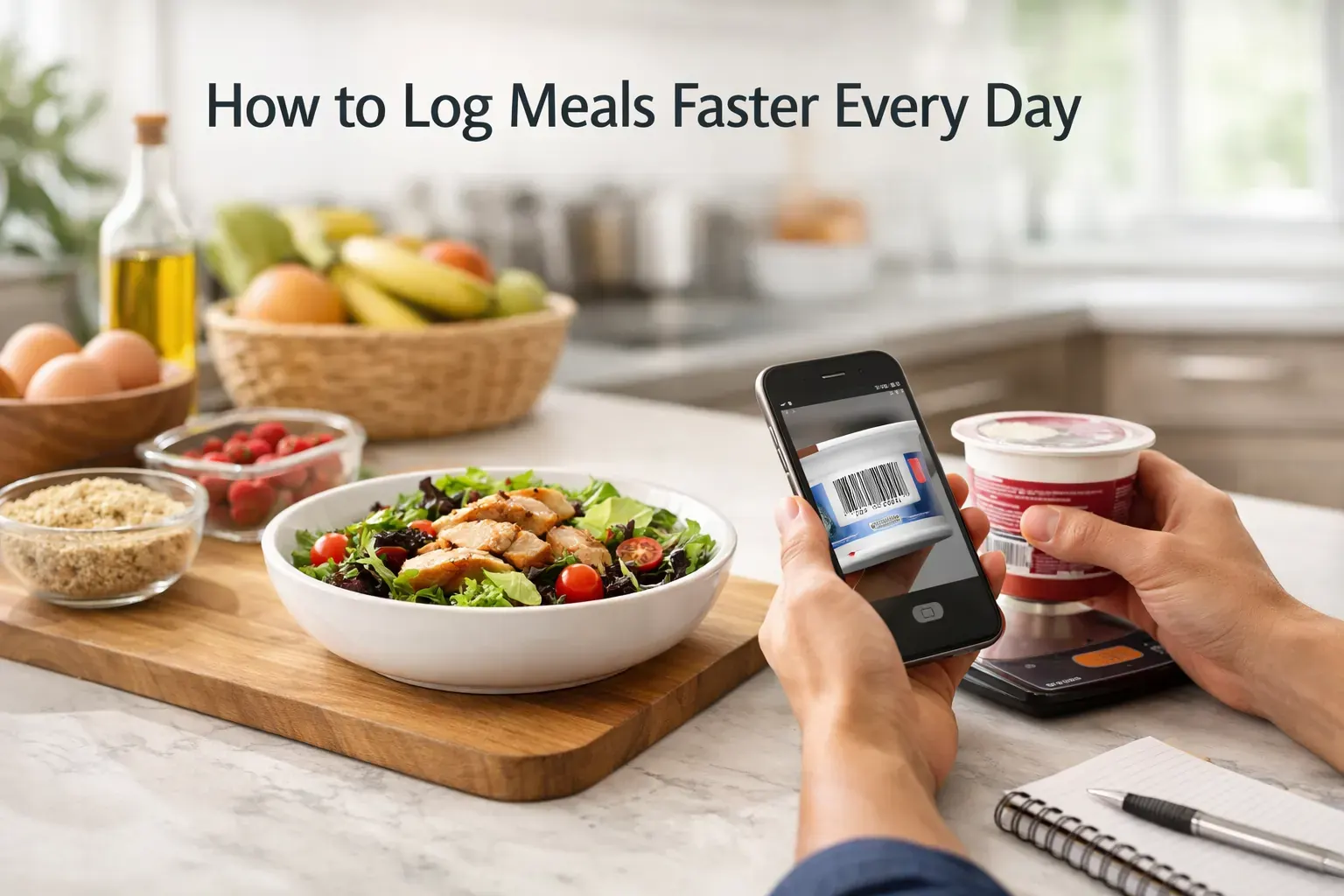
If meal tracking keeps slipping because it feels like admin, the fix usually is not more discipline. It is a better system. If you want to know how to log meals faster, the real win is cutting decisions, taps and repeat entry so logging feels as quick as checking your bank balance.
Most people do not stop tracking because they do not care. They stop because breakfast takes six taps, lunch needs guesswork, and dinner gets postponed until they cannot remember what they ate. Fast logging matters because speed keeps the habit alive. And when the habit stays alive, your calorie budget stays visible.
How to log meals faster without cutting corners
Logging faster is not about being perfect with every gram. It is about being consistent enough that you can see where your calorie credit is going and make better calls before the day gets away from you.
That means using the quickest logging method that still gives you a useful level of accuracy. For a packaged yoghurt, scanning is usually best. For a homemade pasta, a saved recipe or photo log may be the smarter route. For your usual morning coffee, a recent-history tap should beat searching every time.
The trade-off is simple. The more precision you chase, the more time you spend. For most people trying to lose weight or maintain a steady deficit, fast and consistent beats slow and abandoned.
Pick one default method for each type of meal
The biggest time drain is deciding how to log. When every meal starts with, what is the fastest way to enter this, you add friction before you even begin.
A better approach is to assign a default. Use barcode scanning for packaged foods. Use photo recognition for mixed meals. Use saved meals for anything you repeat weekly. Use manual edits only when the app cannot get close enough on its own.
This removes choice fatigue. Instead of building a logging method from scratch three or four times a day, you run the same play each time. That is how tracking starts to feel automatic.
Save your repeat meals early
Most people eat far more repeat meals than they think. The same breakfast on weekdays. The same meal deal at lunch. The same Friday takeaway order. If you log these from scratch each time, you are paying the full time cost again and again.
Save them the first time properly, then reuse them. A two-minute setup can save you hours over a month. This matters even more if your goal is a sustainable deficit, because repeatable meals make your calorie budget easier to control.
There is a small trade-off here. If your homemade meals vary a lot each time, a saved meal may not be exact. But if the difference is modest, the time saved often outweighs the tiny loss in precision.
Use the fastest tools first
Some logging methods are simply quicker than others. If speed is the goal, start with the features that remove typing.
Snap meals instead of searching every ingredient
Photo logging is one of the simplest ways to cut friction, especially for lunches, dinners and meals eaten out. Typing out every part of a burrito bowl or café brunch is where many people give up. Snapping the meal first gives you a practical shortcut.
It also helps in real life. You can log in the moment, even if you are busy, then review or adjust if needed. That is much better than relying on memory at 9 pm when the details are fuzzy.
For mixed dishes, photo recognition is not magic. Sauces, oils and portion sizes can still need a quick check. But getting 80 to 90 per cent of the way there in seconds is a much better system than postponing the task and missing it altogether.
Scan barcodes for packaged foods
Barcode scanning is the quickest route for supermarket staples, snacks, protein bars, ready meals and drinks. It cuts out search errors and usually gets you straight to the exact product.
This works especially well for busy mornings. If your breakfast includes cereal, yoghurt, milk or a grab-and-go item, scanning keeps the process moving. It is also useful when you are trying to stay inside a specific calorie credit target, because you can see the cost of an item immediately.
If you often buy the same branded products, the speed gain compounds. You stop treating basic food entry like a research task.
Use your food history like a shortcut menu
A good food history is more than a record. It is a fast-access panel for your usual choices. If your app stores meals by day and time, it should help you repeat common entries with almost no effort.
This is one of the most underrated ways to learn how to log meals faster. Your past week already tells you what you are likely to eat next. Use that pattern. If your weekday breakfast barely changes, your history should let you re-enter it in seconds.
Plan to reduce logging time later
The fastest meal to log is often the meal you planned earlier. Planning removes searching, estimating and last-minute swaps, which are what slow most people down.
Build a basic 7-day structure
You do not need a rigid food timetable. You just need enough structure that the week is not one long chain of decisions. A simple seven-day plan creates a repeatable frame for breakfasts, lunches, dinners and snacks.
When your meals are loosely pre-set, logging becomes confirmation rather than detective work. You already know what is coming, what it roughly costs in calories, and how it fits your daily budget.
This is where one-tap diet planning can save real time. Instead of deciding from scratch, you start from a workable week and tweak where needed. That is especially helpful if your weekdays are packed and your calorie choices tend to drift under pressure.
Prep ingredients, not just meals
Full meal prep works for some people, but not everyone wants five identical lunches lined up in the fridge. Ingredient prep is often more flexible and nearly as fast.
If you have cooked chicken, chopped veg, rice, wraps and a few sauces ready, you can build meals quickly and log them from familiar combinations. Over time, these combinations become saved meals or easy photo entries, which trims tracking time even more.
The point is not to make eating feel robotic. It is to reduce the number of moving parts when you are hungry and short on time.
Accuracy still matters, but not equally everywhere
A common mistake is spending too much time on low-impact items while barely estimating the parts that change the meal most.
If you want to log faster and still keep your numbers useful, focus your attention where calories pile up quickly. Oils, dressings, sauces, nut butters, pastries, takeaways and alcohol usually deserve more care than green veg or black coffee. This is where a quick estimate can swing a meal far more than whether your banana was slightly bigger than average.
That mindset saves time. You stop micromanaging the harmless details and pay attention to the expensive items in your calorie budget.
There are also days when speed matters more than precision. A working lunch, a family dinner out, a long travelling day. On those days, a good-enough log keeps the habit intact. You can always tighten things up at the next meal.
Make fast logging part of the meal itself
The easiest meals to log are the ones you log before the day gets crowded. Waiting until the evening turns tracking into homework.
Try linking logging to the first bite, not the end of the day. Scan before you open the packet. Snap the meal when it arrives. Reuse a saved breakfast while the kettle boils. These tiny timing shifts matter because they keep logging attached to the eating moment.
This is where a mobile-first app has a clear advantage. If your phone is already with you, logging should happen in the same window as the meal decision. Calorie Bank Credit is built around that kind of quick, budget-style check-in, which makes the process feel less like dieting and more like staying on top of your daily spend.
If you miss a meal, do not write off the day. Backfill it quickly from memory, get reasonably close, and move on. Consistency beats clean-sheet thinking every time.
The best system is the one you will still use on your busiest Wednesday, not the one that only works when life is quiet. Keep it simple, use the fastest tool available, and let your tracking support your day rather than take it over.