
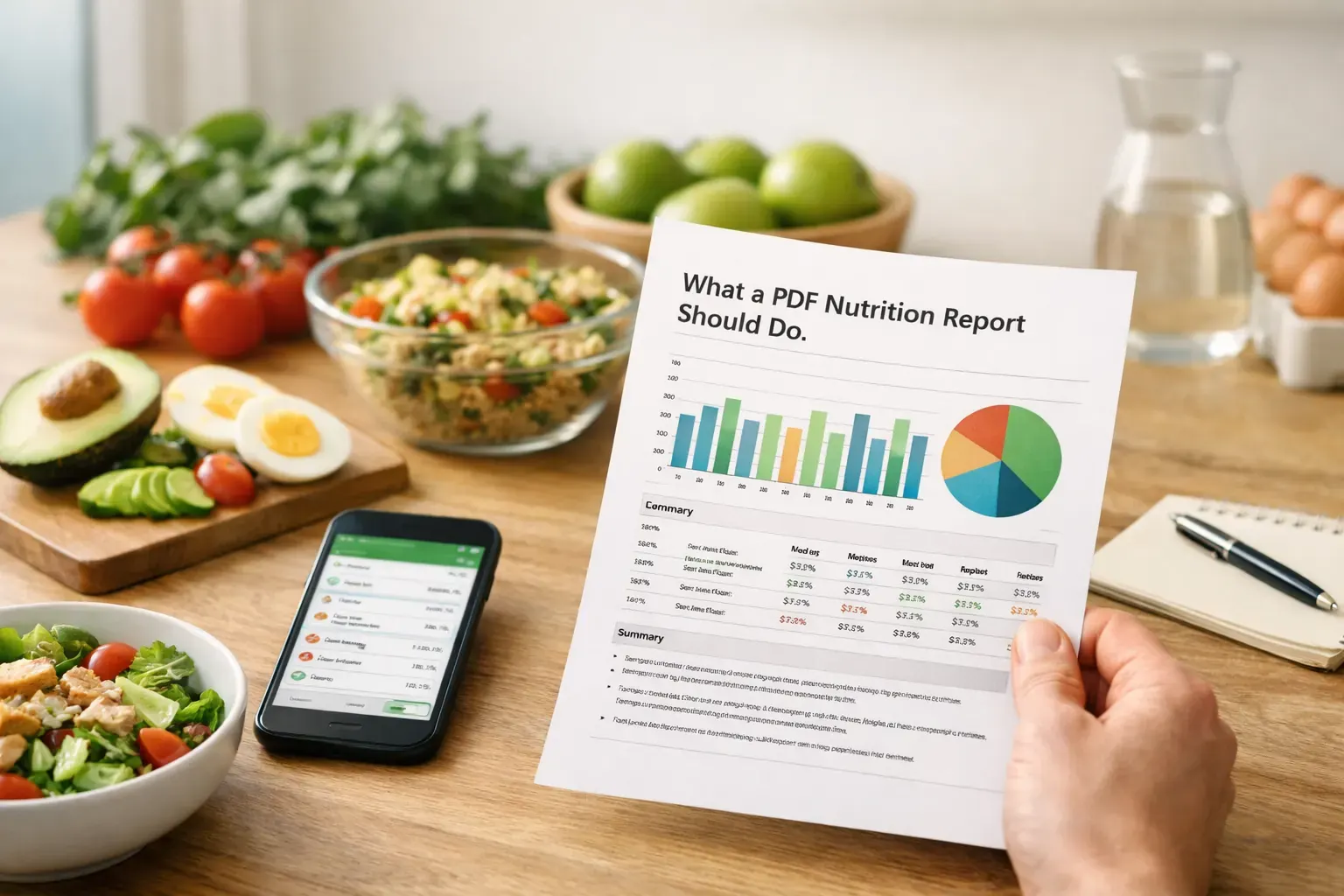
A good pdf nutrition report app earns its place the moment you need to stop guessing. Maybe you want to see whether your calorie deficit is actually consistent. Maybe you want a cleaner record of what you have eaten over the past month. Or maybe you simply want proof that your effort is adding up. Whatever the reason, a report should turn daily logging into something useful, not just produce another file you never open.
That is where many nutrition apps fall short. They track food, count calories and show charts, but the reporting feels like an afterthought. A proper PDF report should give you a clear view of your intake, your habits and your progress in a format that is easy to save, share and revisit. If the app already helps you snap meals, scan barcodes and plan your week, the report should feel like the natural final step.
Why a pdf nutrition report app matters
Tracking is only helpful if it leads to better decisions. Logging breakfast, lunch and snacks every day creates a lot of data, but raw data does not keep you on course. A report does. It helps you spot patterns that are hard to notice meal by meal, such as overeating at weekends, underestimating liquid calories or drifting above your budget through small extras.
This matters even more if you are trying to build a sustainable calorie deficit rather than follow a strict short-term plan. Most people do not need more guilt. They need more visibility. A report gives structure to that visibility. It shows whether your numbers line up with your goal and whether your routine is working in real life.
PDF format is useful because it is stable and shareable. It looks the same on your phone, tablet or laptop. You can keep it for your own records, use it to compare one month against another or send it to a coach or health professional if you want outside input. It turns progress from something vague into something concrete.
What a PDF nutrition report app should include
The basics need to be there. Total calories by day, average intake over time and a clear date range should not be optional. If a report cannot quickly show what you ate and when, it is not doing the job.
But the better apps go further. They show trends, not just totals. Seeing one high-calorie day is not very meaningful on its own. Seeing that your weekday intake is on target but your Saturdays regularly wipe out the deficit is much more helpful. The same goes for meal timing, consistency and repeat food choices.
A useful report should also be easy to read. That sounds obvious, but plenty of nutrition exports feel like spreadsheets in disguise. If you need ten minutes to interpret your own report, the design has failed. Clean sections, simple graphs and sensible summaries make the difference.
For many users, context matters as much as numbers. If your app includes meal photos, barcode scans, food history and planned meals, those details should support the report rather than sit in separate corners of the app. The strongest reporting tools connect logging, planning and review into one system.
The real difference between data and accountability
People often assume accountability comes from daily discipline alone. In practice, it usually comes from review. You are far more likely to stay consistent when you can look back and see exactly how your choices are stacking up.
That is why a pdf nutrition report app works best when it supports regular check-ins. Weekly and monthly reports are especially useful because they match how most people think about progress. A single meal can feel like a failure. A full week often tells a more balanced story. You might see that one restaurant meal did not derail anything because the rest of your intake stayed within range.
This kind of perspective is reassuring. It moves the focus away from perfection and back towards consistency, which is where lasting results usually come from.
A smarter report fits real life
Most people are not looking for academic nutrition analysis. They want practical answers. Am I staying within my target most days? Which meals are costing me the most calories? Is my routine improving or slipping? A report should answer those questions quickly.
That is one reason the budgeting model works so well for calorie management. When calories are framed as a daily credit or spending limit, reports become easier to understand. You are not scanning a wall of nutrition terms. You are reviewing where your calorie budget went and whether you stayed on track. That makes the feedback feel clearer and less punishing.
For busy users, speed matters too. If logging is fast but reporting is clunky, the whole experience breaks down. The best apps make it simple to record meals with a photo, scan packaged foods, build a seven-day plan and then export a report without extra admin. It should feel like one system, not five separate tools.
PDF nutrition report app features that actually help
A lot of apps advertise exports, but not all exports are worth having. The most helpful reporting features are the ones that support action.
A good report should highlight calorie averages, daily variance and adherence over time. If it can show planned intake against actual intake, even better. That gives you a more useful view of whether your meal planning is realistic or too ambitious.
It also helps when reports reflect food history in a way that is easy to interpret. Repeated takeaways, skipped breakfasts, late-night snacks and frequent high-calorie convenience foods all tell a story. The report does not need to judge those choices. It simply needs to show them clearly enough for you to adjust.
If weight management is your goal, progress reports should support that goal without turning into obsession. More detail is not always better. Some users benefit from full macro breakdowns, while others just need calories, consistency and a record of their habits. The right level of detail depends on where you are. Beginners often do better with simpler reporting. More experienced users may want finer controls.
When sharing a report is useful
Not everyone needs to send a report to someone else. Plenty of people use a PDF purely for personal review, and that is a strong use case on its own. Still, there are times when sharing helps.
If you work with a coach, trainer or dietitian, a clean PDF is much easier than screenshots and half-remembered food logs. If you are trying to understand why progress has stalled, a report creates a shared reference point. It reduces guesswork and keeps the conversation practical.
There is also a quieter kind of accountability in saving reports for yourself. Looking back at the last six weeks can be motivating in a way daily weigh-ins often are not. You can see patterns, effort and improvement, even when progress feels slow day to day.
Choosing the right app for reporting
If reporting matters to you, do not treat it as a bonus feature. Check whether the app makes reports readable, useful and quick to export. Look at what is actually included. A file full of numbers is not enough.
The strongest option is usually the one that combines low-friction tracking with low-friction review. That means food photo logging, barcode scanning, meal planning, a clear history and exportable reporting working together in one place. Calorie Bank Credit is built around that idea - track intake like a budget, review the numbers clearly and keep moving without the drama that often comes with dieting.
There is one trade-off worth mentioning. The simpler the system, the more it favours usability over deep analysis. For most people, that is a benefit. But if you need highly specialised clinical nutrition reporting, a mainstream consumer app may not cover every edge case. It depends on whether your priority is everyday adherence or advanced nutritional detail.
For the majority of people trying to lose weight or manage intake more consistently, the winning formula is not complexity. It is clarity. A report should help you understand your habits, not bury you in them.
Choose a tool that makes it easy to log what you eat, plan ahead when life gets busy and export a report that tells the truth clearly. When your data is easy to read, it becomes much easier to stay honest, stay calm and keep your calorie budget working for you.