
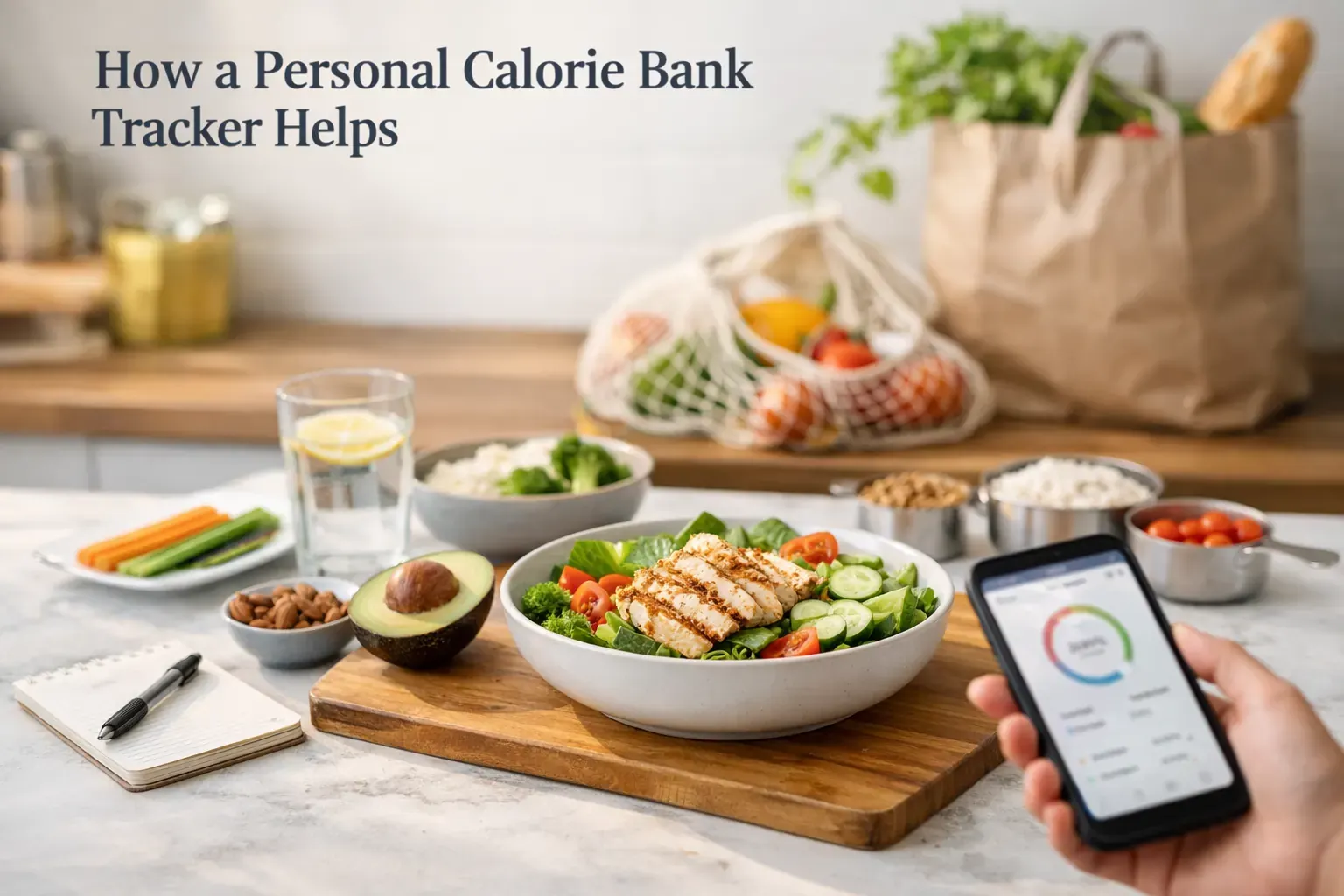
You do not need another food diary that makes lunch feel like homework. A personal calorie bank tracker works better for real life because it treats your intake like a daily budget. You are not trying to be perfect. You are simply managing what comes in, what gets spent, and how to stay on track over time.
That shift matters more than it sounds. For many people, calorie tracking breaks down because it feels punitive, fiddly or all-or-nothing. A banking model is easier to grasp. If you know roughly how much you can spend in a day, you make better decisions without turning every meal into a maths exercise.
What a personal calorie bank tracker actually does
At its core, a personal calorie bank tracker gives you a clear daily allowance and helps you log food against it quickly. Breakfast, snacks, coffees, ready meals, takeaway dinners - they all count as spending from the same balance. The benefit is not just seeing a number go down. It is being able to make decisions in the moment.
If you scan a barcode at lunch and notice you have used more of your balance than expected, you can adjust dinner without stress. If you know you are eating out on Friday, you can plan the week with that in mind. The tracker becomes less of a record-keeping tool and more of a decision tool.
That is where this model tends to beat traditional calorie apps. Standard trackers often present data as a stream of entries and totals. Useful, yes, but not always intuitive. A calorie bank approach frames the same information in a way that feels practical. You have a budget. You spend it. You stay within range often enough to create a sustainable deficit.
Why the budgeting model feels easier to follow
Most adults already understand budgeting. You do not need a nutrition qualification to know what it means to overspend, save room for later, or keep an eye on your balance. Applying that same logic to food removes a lot of the friction.
It also reduces the emotional charge. Many diet tools make people feel judged the moment they go over target. A budgeting model is firmer and calmer. If one meal costs more than expected, the answer is not guilt. The answer is adjustment. That mindset makes consistency much more realistic, especially for busy weeks, social plans and imperfect routines.
There is also a practical advantage. When your calories are framed as credit or spending capacity, portion choices become easier to compare. A pastry and a high-protein breakfast are no longer abstract nutrition entries. They are two different spends with two different effects on the rest of your day.
The best personal calorie bank tracker features to look for
Speed matters more than most people think. If logging takes too long, you stop doing it. A useful tracker should make food entry feel almost automatic, particularly on weekdays when time is tight.
Photo logging is one of the biggest improvements here. Being able to snap a meal and let the app identify likely foods removes a major barrier. It is not magic, and some meals will still need checking, but it cuts down the effort enough to keep the habit going.
Barcode scanning matters for the same reason. Packaged foods are part of normal life. If you can scan a yoghurt, sandwich or microwave meal in seconds, you are more likely to track accurately and more likely to stick with it.
Meal planning is the next piece that often gets overlooked. Tracking yesterday is useful. Planning tomorrow is better. A strong personal calorie bank tracker should help you build a realistic week, not just react after the fact. Even a simple seven-day structure can stop the usual pattern of under-planning early and overspending later.
Food history is equally valuable when it is shown clearly. A calendar view helps you spot patterns fast. You can see whether weekends are drifting, whether work-from-home days are easier, or whether your intake changes when you skip breakfast. Trends are what matter, not one random Tuesday.
Reports can help too, especially if you like accountability. Exportable records give you something tangible to review, share or keep for your own progress checks. For some people, that extra layer turns vague effort into visible proof.
How to use a personal calorie bank tracker without becoming obsessive
The right approach is disciplined, not rigid. Start with a sensible calorie budget based on your goal, then use the tracker to support routine decisions. Log meals as you go where possible. Pre-log when you can. Check your remaining balance before dinner instead of after it.
Accuracy matters, but not every entry needs laboratory precision. If your lunch is homemade pasta, estimate it honestly and move on. If your dinner is from a chain restaurant with listed calories, use the data. The point is to build a reliable system, not a perfect one.
It also helps to think in ranges. Some days will run higher, some lower. Over time, your average is what drives progress. The banking mindset is useful here because it encourages steadiness. You are aiming to manage your intake consistently enough to maintain a deficit, not to produce a flawless scorecard every day.
For many people, the smartest routine is simple: snap meals, scan packaged foods, pre-plan one or two difficult parts of the day, and review your history once a week. That is enough structure to stay accountable without making food tracking your full-time job.
Where people usually go wrong
The most common mistake is waiting until the end of the day to log everything from memory. That usually leads to undercounting and surprise totals. A tracker works best when it guides choices before they happen, not just records them afterwards.
Another issue is setting an unrealistic budget. If your daily target is too aggressive, the tracker will feel punishing no matter how good the design is. A moderate deficit is easier to maintain and often produces better long-term results because you can actually live with it.
Some people also focus too heavily on single meals. A high-calorie dinner is not failure. It is just one spend inside a larger pattern. The value of a personal calorie bank tracker is that it shows the whole picture. You can adjust the next meal, the next day, or the next week.
And then there is the perfection trap. Missing a log does not mean the system is broken. It means you had a busy day. Start again at the next meal. Consistency wins because it survives normal life.
Why this approach suits busy adults
If your days are packed, you need a tool that respects your time. That is why the calorie banking model works so well for professionals, parents and anyone juggling too much already. It strips the process down to one clear question: how much of today’s budget have I used, and what do I want to do with the rest?
That question is easier to answer than analysing every macro split or chasing dietary perfection. It keeps attention on the behaviour that moves the needle most - staying aware of intake and maintaining a manageable deficit.
A mobile-first setup makes this even more practical. If you can photograph breakfast, scan lunch, generate a plan for the week and check your food history from your phone, the process fits around your life instead of interrupting it. That is exactly why tools such as Calorie Bank Credit appeal to people who want clarity and control without the usual diet drama.
Personal calorie bank tracker tools are only as good as the habit behind them
The app matters, but the routine matters more. The best tracker in the world cannot help if it is too complicated to open or too irritating to use daily. What works is a tool that lowers friction enough for repetition to happen.
That means fewer taps, faster logging and clearer feedback. It means knowing your balance at a glance. It means being able to recover quickly after a social meal, a late train home, or a weekend that went off-plan. Progress is rarely neat. Your tracker should make it easier to reset, not easier to give up.
A personal calorie bank tracker is most useful when it becomes part of your normal decision-making, like checking your calendar or bank balance. Once it feels familiar, the process stops feeling like dieting and starts feeling like self-management. That is a much better place to build from.
If you want something you can keep using next month, not just next Monday, choose the method that makes staying aware feel simple. The easier it is to track honestly and adjust calmly, the more likely your results will last.