
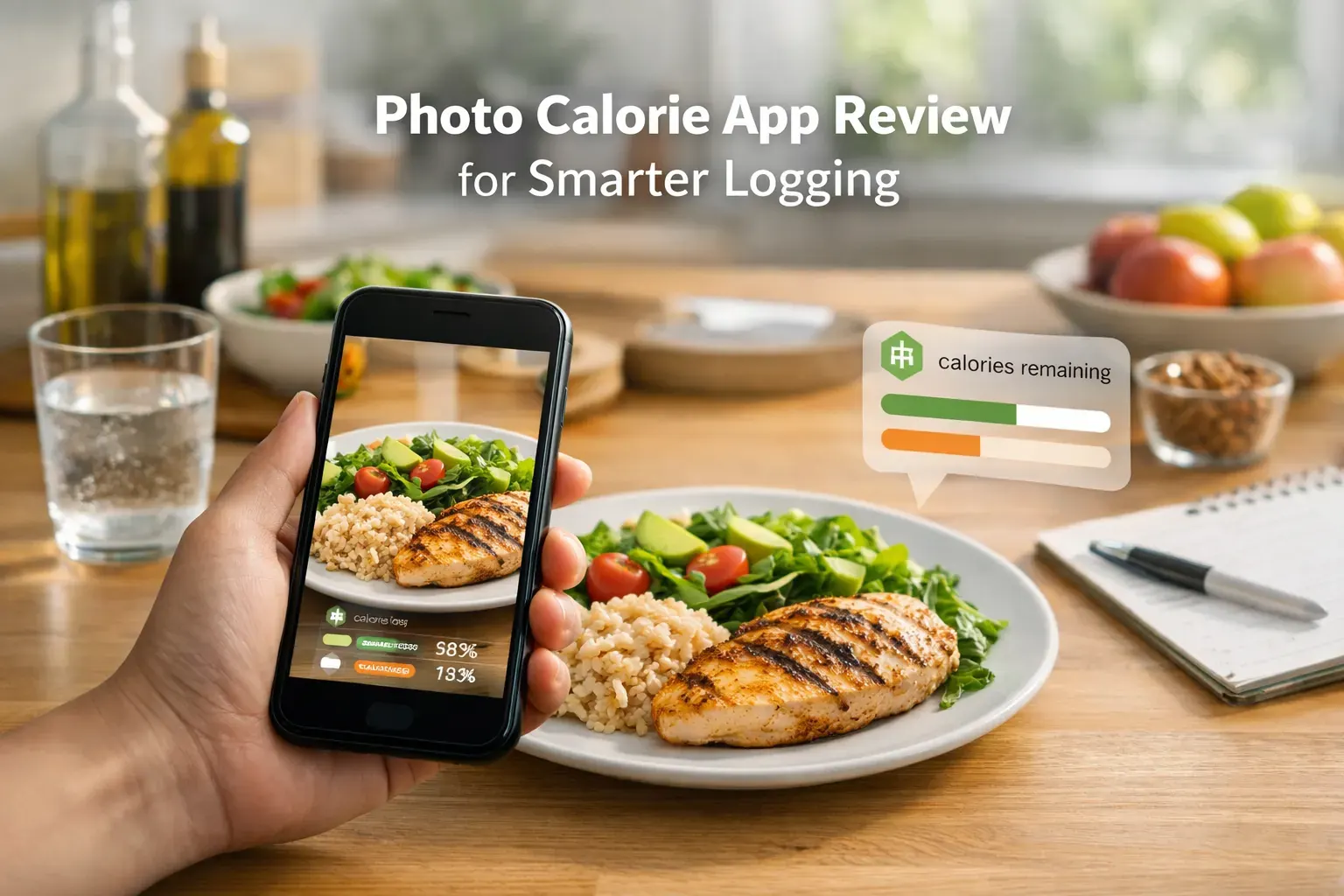
You do not need another food diary that turns lunch into admin. A good photo calorie app review should answer one question fast: does snapping a meal actually make calorie tracking easier, or does it just look clever in the App Store preview? For most people, the difference comes down to speed, accuracy, and whether the app helps you stay in a realistic calorie deficit without turning every meal into homework.
Photo-based calorie apps promise a simple trade: take a picture, get an estimate, move on with your day. That promise is appealing if you are busy, tired of manual entry, or have fallen off tracking because traditional apps ask too much of you. But the best results come from understanding what these apps do well, where they still need a human check, and which features make the whole system easier to stick with.
What a photo calorie app review should really measure
The flashy part is obvious - point your phone at a plate and let AI identify the food. The useful part is less glamorous. You want to know whether the app helps you make better decisions repeatedly, not whether it guesses a pasta dish correctly once under perfect lighting.
In practice, a strong photo calorie app should reduce friction at three points. First, it should make logging quick enough that you actually do it. Secondly, it should give calorie estimates that are close enough to guide daily choices. Thirdly, it should help you course-correct when a meal is unclear, mixed, or home-cooked.
That is why the best apps are not just camera tricks. They combine photo recognition with barcode scanning, editable entries, meal history, and some form of planning. If the app cannot handle both a homemade chilli and a packaged yoghurt, it will not hold up in real life.
Photo calorie app review: where these apps save time
The biggest win is obvious from day one. Taking a photo is faster than searching a database, picking the wrong entry, checking serving sizes, and adjusting grams. For breakfast, lunches out, and repeat meals, that time saving matters more than most people expect. The easier the log, the more complete the log.
This is especially useful for people who have abandoned calorie tracking before. Often the problem is not motivation. It is friction. If every snack takes two minutes to enter, consistency starts to break by Wednesday. A photo-first app cuts that delay and makes tracking feel less like punishment.
There is also a psychological benefit. Snapping a photo feels closer to keeping a record than submitting to a diet. That softer experience can make people more willing to stay accountable, especially if they have had a poor experience with rigid weight-loss tools in the past.
Where photo logging still falls short
No honest photo calorie app review should pretend the camera solves everything. Portion size is still the main weakness. A photo can often identify what is on the plate, but estimating how much is there is harder. A chicken curry could be 450 calories or 850 depending on oil, serving size, and extras that are not obvious in a single image.
Mixed meals are another challenge. Soups, casseroles, wraps, smoothies, and dishes with hidden ingredients can be difficult for AI to judge accurately. Restaurant meals can also skew high or low because recipes vary more than users assume.
Lighting, angles, bowls, sauces, and toppings all affect recognition too. So if your goal is absolute precision, a photo app alone is not enough. But most people do not need laboratory accuracy. They need a reliable daily system that keeps them within a sensible range often enough to build a sustainable deficit.
That is the trade-off. Photo logging is usually better for adherence, while manual weighing is better for precision. For many users, adherence wins.
The features that make a photo calorie app genuinely useful
The camera is only part of the product. What matters more is the workflow around it. If a meal scan takes three seconds but correcting it takes three minutes, the advantage disappears.
The strongest apps let you snap meals, then edit quickly if something looks off. They also handle packaged foods with barcode scanning, because no one wants AI guessing a cereal bar that already has exact nutrition data available. This combination is far more practical than relying on image recognition for every food type.
Meal history matters as well. If you eat similar breakfasts, meal deals, coffees, or gym snacks each week, being able to pull from a calendar or past log saves time and improves consistency. Repetition is where calorie tracking becomes manageable.
Planning tools are another divider between novelty and usefulness. A photo log tells you what happened. A meal plan helps shape what happens next. If your app can turn your targets into a simple weekly structure, you spend less time reacting to hunger and more time staying on budget.
That budget mindset is where some apps stand out. Treating calories like a daily spending allowance is easier for many people to understand than abstract diet language. Instead of feeling as though you have failed because you ate a larger lunch, you can simply rebalance your remaining intake. It is practical, calm, and easier to repeat.
Who gets the most value from a photo calorie app
If you are an iPhone user with a busy routine, photo logging is often a strong fit. It suits commuters, office workers, parents, and anyone eating on the go who needs a fast record without opening five menus. It also works well for beginners who want structure but are put off by traditional tracking apps.
It can be especially effective if you know roughly what to eat but struggle with consistency. In that case, speed matters more than perfection. A fast estimate logged every day is usually more useful than a detailed diary you abandon after four days.
On the other hand, if you are following a highly specific nutrition plan, meal prepping with weighed ingredients, or managing complex macro targets, you may still want more manual control. Photo apps can support that process, but they may not replace detailed entry entirely.
What to look for on iPhone before you commit
A useful photo calorie app review should go beyond whether the camera works. Look at how many taps it takes to log a meal, correct an estimate, scan a barcode, and revisit old entries. Small delays add up.
Check whether the app gives you a clear daily target and remaining allowance. This sounds basic, but it changes behaviour. A clean calorie budget helps you make decisions in the moment, which is far more valuable than a cluttered dashboard full of metrics you never use.
It also helps if the app includes meal planning and recipe support. If you can generate a workable seven-day plan or build meals from ingredients you already have, the app becomes more than a tracker. It becomes a daily control panel.
Reporting can matter too. Exportable records are useful if you want to review patterns, share progress with a coach, or simply see how your habits shift over time. Trends keep you honest without forcing you into all-or-nothing thinking.
One example of this more practical approach is Calorie Bank Credit, which frames daily intake like a calorie budget rather than a punishment system. That makes features such as photo logging, barcode scanning, weekly plans, and food history feel connected instead of scattered.
So, are photo calorie apps worth it?
For most people, yes - if you judge them by consistency rather than perfection. The best ones remove enough friction that you keep logging, and that habit matters more than squeezing out a tiny extra margin of accuracy from a tool you hate using.
A weak app will feel gimmicky after a week. A strong one will help you log quickly, check details when needed, plan ahead, and stay aware of your remaining calorie budget without drama. That is the real standard.
If your current tracking method feels slow, fiddly, or easy to ignore, a photo-first app can be a smart upgrade. Just keep your expectations realistic. Let the camera do the heavy lifting, use barcode and edit tools when needed, and focus on building a system you can follow on ordinary Tuesdays, not just highly motivated Mondays.
The best calorie strategy is the one you will still be using next month - and if taking a quick photo keeps you accountable, that is money well managed.