
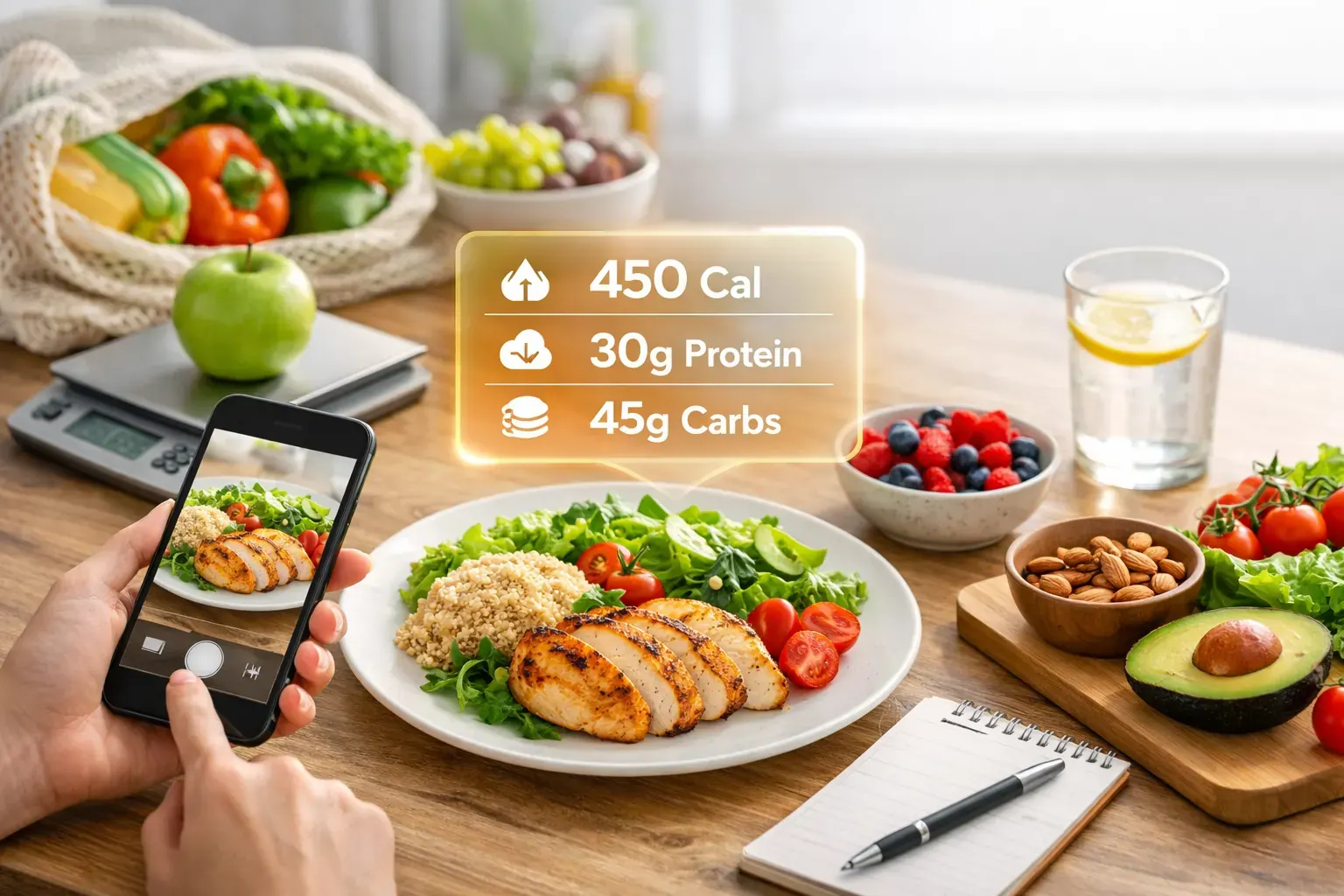
A year ago, logging lunch meant guessing portions, searching databases, and hoping your entry was close enough. Now the best trends in AI food logging are cutting that admin down to a few seconds. For anyone trying to manage weight without turning every meal into paperwork, that shift matters because speed is often the difference between staying consistent and giving up by Thursday.
AI food logging is moving away from the old model of manual tracking first, insight later. The newer model is much more useful for real life. You snap, scan, confirm, and move on. That sounds simple, but the real change is what happens underneath: better recognition, better context, and better prompts that help you stay within a sensible calorie budget.
Why trends in AI food logging matter now
Most people do not stop tracking because they do not care. They stop because the process becomes annoying. If breakfast takes three taps but dinner takes fifteen, consistency starts to slip. That is why the most important changes in AI food logging are not flashy features for their own sake. They reduce friction.
For people who want to lose weight or simply keep intake under control, that reduction in effort has a direct payoff. More accurate records make deficits easier to manage. Faster records make habits easier to keep. And when an app starts feeling more like a daily budget tool than a food diary, the whole task becomes less emotionally loaded.
1. Photo logging is getting quicker and more realistic
Photo recognition is no longer just a novelty. It is becoming the default entry point because it matches how people actually eat. You see your meal, you snap it, and the app does the first pass.
The best systems are improving in two ways. First, they are getting better at recognising mixed meals rather than only obvious single items. A bowl with rice, chicken, roasted veg and sauce is still harder than a banana, but AI is improving at breaking these meals into likely components. Second, the workflow is getting smarter after recognition. Instead of pretending the estimate is perfect, good tools let you correct the entry quickly.
That trade-off matters. Photo logging is fast, but it will not always be exact, especially with home cooking, oils, dressings and shared dishes. The winning products are the ones that treat speed and correction as a pair, not as rivals.
2. Barcode scanning is becoming part of a hybrid system
Packaged food is where people expect accuracy, and barcode scanning still does a lot of heavy lifting. What is changing is how it fits into the wider experience.
Rather than making users choose between AI and manual tools, newer apps are blending methods. You might photograph your breakfast, scan your afternoon snack, and generate dinner from ingredients already in your kitchen. That mixed approach is more practical than pushing one logging method for everything.
This is especially useful for busy people who need different levels of precision at different times of day. A protein yoghurt or ready meal should be quick to scan. A homemade curry may need a photo plus a few edits. Good AI food logging respects that not all meals deserve the same amount of effort.
3. Calorie tracking is shifting towards budget-style feedback
One of the more useful trends in AI food logging is not purely technical. It is about framing. Traditional calorie apps often present intake as a long list of numbers with too little context. Newer tools are reframing calories as a daily spending budget.
That simple shift can make weight management easier to understand. Instead of seeing food logging as judgement, users see it as allocation. You have a budget, meals draw from it, and the goal is to spend with intention rather than panic late in the day.
This approach works particularly well with AI because fast logging only helps if the feedback is immediately clear. If an app can tell you where you stand after one photo or one scan, it becomes much easier to make the next decision well. That might mean adjusting dinner, saving room for dessert, or spotting when a weekday habit is quietly pushing you over target.
4. Meal planning is moving closer to logging
Tracking after the fact is helpful. Planning before the fact is often better. That is why AI food logging and AI meal planning are starting to merge.
Instead of treating logging as one feature and planning as another, newer apps connect the two. You log what you actually eat, the system spots patterns, and then it helps generate realistic meal ideas for the next few days. Not aspirational meals you will never cook, but options based on your calorie target, routine and likely ingredients.
This is where AI becomes more than a calculator. It becomes a decision support tool. If your workdays tend to run long, the app can steer you towards quicker dinners. If your weekends are less structured, it can help you build in more flexible meals without losing control of your weekly intake.
There is still a limit here. Planning only helps if people will actually follow it. Overly strict plans look tidy on screen and collapse in real life. The better direction is flexible planning with enough structure to reduce guesswork.
5. Ingredient-based logging is getting more useful for home cooking
Home-cooked meals have always been one of the hardest parts of calorie tracking. Restaurant chains publish data. Packaged foods have labels. Your own pasta bake does not.
AI is improving this by making ingredient-based entry faster. Instead of building meals from scratch every time, users can enter a few core ingredients, get a reasonable calorie estimate, and save that meal pattern for later. Over time, this turns repeated home cooking into a low-effort routine rather than a fresh admin task.
The practical benefit is consistency, not perfection. A homemade chilli may still vary from one week to the next. But if the app can help you capture the main ingredients and portion pattern, you get a much clearer view of your intake than you would by guessing or skipping the meal entirely.
For users trying to stay in a sustainable deficit, that is often enough. Perfect data is not required. Reliable habits are.
6. Progress reporting is becoming more visual and more useful
Logging food is only motivating if you can see what the numbers mean over time. Another of the key trends in AI food logging is the rise of clearer progress reporting.
Daily entries alone can feel noisy. One high-calorie meal says very little on its own. A month of patterns tells a much better story. That is why calendar views, trend summaries and exportable reports are becoming more valuable. They turn isolated meals into evidence.
This matters for two kinds of users. First, people who want personal accountability without overthinking every day. Second, people who like to review progress with a coach, trainer or healthcare professional. A clean PDF report or visual history makes those conversations easier because it shows actual behaviour rather than vague memory.
The caution is that reporting should guide, not shame. If every chart feels like a scorecard for moral success, people disengage. Better reporting keeps the tone factual: here is what happened, here is the pattern, here is the next adjustment.
7. AI coaching prompts are getting more timely
The most useful prompts are not generic reminders to eat well. They are timely nudges tied to behaviour. If you regularly underspend your calorie budget early in the day and overcorrect at night, a good app can spot that. If your weekends consistently break the pattern you keep on weekdays, it can flag that too.
This is where AI food logging starts to feel genuinely supportive. Not because it lectures, but because it notices repeat behaviour quickly enough to help. A short prompt before the usual problem moment is often more effective than a detailed analysis after the damage is done.
Still, there is a line between helpful and noisy. Too many prompts become wallpaper. The best systems keep alerts sparse, relevant and easy to act on.
What these trends mean for everyday users
If you are choosing a food logging app now, the main question is not whether it uses AI. Nearly all of them will claim that. The better question is whether the AI saves time and improves decisions.
That means looking for a workflow that fits ordinary life. Can you snap a meal quickly? Can you scan packaged foods without fuss? Can you build a realistic plan for the week instead of relying on willpower alone? Can you review your progress in a way that actually helps you adjust?
For many people, the smartest setup is one that combines speed with structure. A photo for fast capture, a barcode for precision where it matters, a weekly plan to reduce guesswork, and a clear calorie budget to keep the whole day understandable. That is the space where tools such as Calorie Bank Credit are pushing things forward - not by making tracking feel more intense, but by making it easier to stay consistent.
The direction of travel is clear. AI food logging is becoming less about impressive tech demos and more about removing excuses, reducing friction and helping people make one better decision at a time. If your app can do that in seconds, you are far more likely to keep using it when life gets busy, and that is usually where progress is won.