
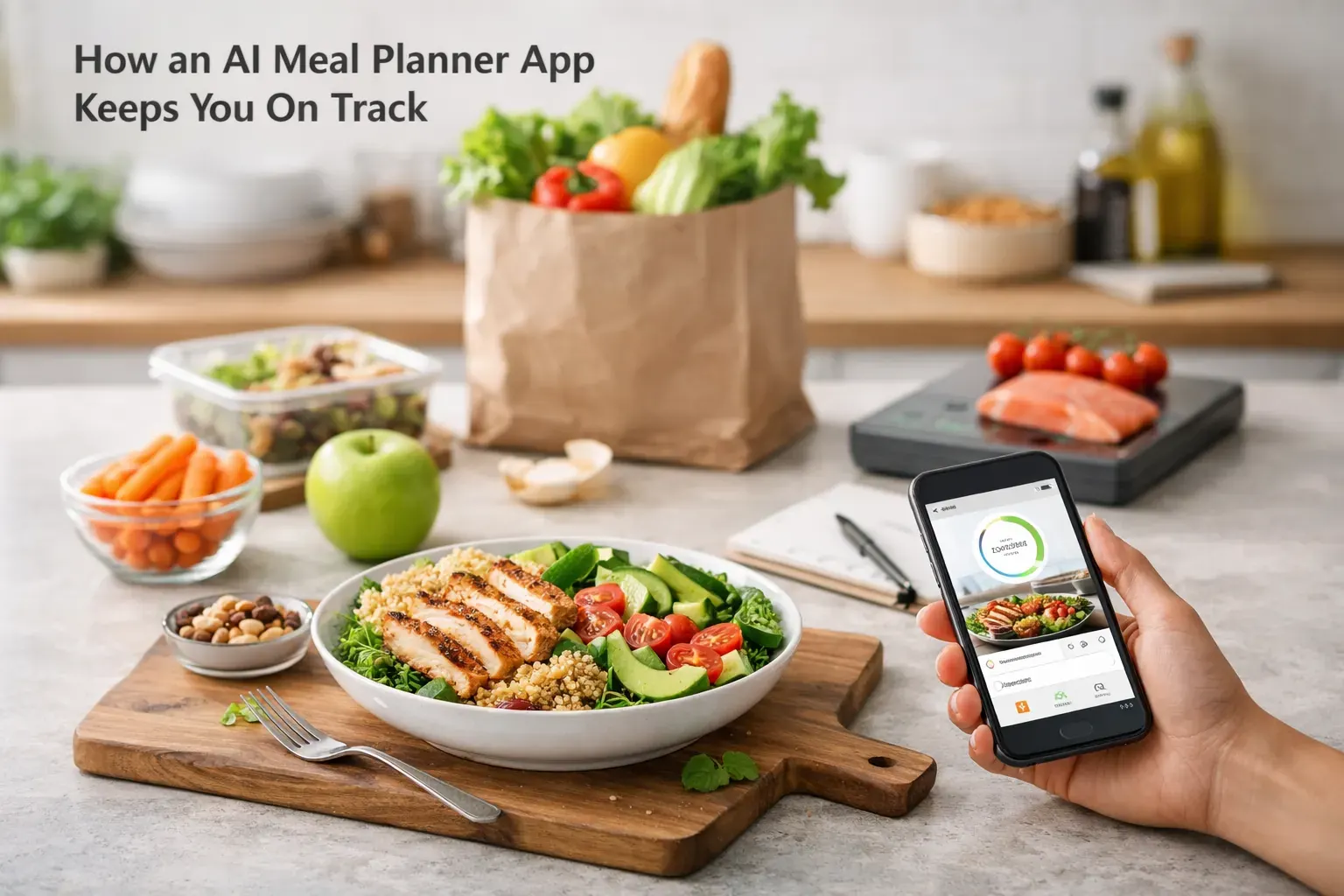
You do not lose progress because of one big meal. More often, it slips through small decisions - a rushed lunch, an unplanned snack, a takeaway that looked harmless until the calories stacked up. That is where an ai meal planner app earns its place. It turns food decisions from constant guesswork into a simple daily system you can actually stick with.
For most people, the problem is not knowing that planning helps. The problem is having enough time and mental space to do it every day. Writing meals out by hand, checking labels, estimating portions, and trying to balance the week can feel like a second job. If your goal is to manage your weight without obsessing over food, the right app should reduce effort, not add more of it.
What an ai meal planner app should actually do
A lot of apps promise personalisation, but the useful ones are practical first. They help you decide what to eat, log what you ate, and see whether your choices still fit your calorie target. If those three parts are disconnected, the app becomes another thing to maintain rather than a tool that keeps you moving.
A strong ai meal planner app should shorten the distance between intention and action. You should be able to snap a meal, scan a barcode, generate a realistic week of meals, and adjust quickly if life changes. If your Tuesday dinner plan disappears because work runs late, the app should help you rebalance rather than make you feel like you have failed.
That matters because consistency is usually built through convenience. The easier it is to make a decent choice, the more often you will do it.
Planning is useful, but budgeting is easier to follow
Traditional meal planning often falls apart because it feels too rigid. You start the week with good intentions, then one meal out or one busy evening knocks the whole structure off course. A budgeting model works better because it gives you room to adapt.
Instead of treating your eating plan like a fixed menu, think of it as a calorie budget. You have a daily amount to spend. Some meals cost more, some cost less. The goal is not perfection. The goal is to keep your spending aligned with your target often enough that progress becomes predictable.
This is where a finance-inspired approach makes calorie management far easier to understand. When calories are framed as credit or budget, the trade-offs become clearer. A heavier lunch does not mean the day is ruined. It simply means dinner may need to be lighter. That shift removes a lot of the all-or-nothing thinking that causes people to abandon tracking altogether.
The features that save the most time
Not every feature matters equally. Busy people tend to stick with tools that remove friction from repeat tasks, not tools that bury simple jobs under too many settings.
Photo logging is a good example. If you can snap your meal and get a fast estimate, you are far more likely to log lunch at your desk, dinner at home, or brunch out with friends. It is not always perfect, and very mixed meals can still need adjustment, but speed often beats precision if the alternative is not logging at all.
Barcode scanning is equally valuable, especially for packaged foods you buy regularly. Once you can scan and move on, food tracking stops interrupting your day. It becomes part of the routine rather than a chore.
Then there is weekly planning. One-tap 7-day plans are useful because they solve the hardest part for many people: deciding. You do not need endless meal inspiration. You need a plan that roughly fits your target, uses familiar foods, and gives you a workable structure for the week ahead.
Ingredient-based recipe generation adds another practical layer. It helps when the fridge is half full, the week has gone off script, and you still want something that fits your budget. That kind of flexibility matters more than fancy recipe libraries that look good but are hard to use in real life.
Why adherence beats perfection
Many people leave calorie tracking apps because they feel judged by them. Miss a target, skip logging for a day, or eat something spontaneous, and the whole experience starts to feel punitive. That is not helpful if your actual goal is better habits over time.
A good app should make recovery easy. If breakfast was larger than planned, you should be able to see your remaining calorie credit and make a smart adjustment for the rest of the day. If the weekend ran high, you should be able to reset on Monday without shame.
This sounds simple, but it changes behaviour. When the system is easy to return to, people keep using it. When it feels harsh or fiddly, they stop. And once tracking stops, awareness usually drops with it.
The best results often come from people who are not doing everything perfectly. They are simply logging often, planning ahead most of the time, and making smaller corrections sooner.
Who benefits most from an ai meal planner app
This kind of app tends to work especially well for people who want structure without diet theatre. If you are a busy professional, you probably do not want to spend half an hour every evening planning tomorrow's food. If you are newer to weight management, you may want clear guidance without needing to learn nutrition jargon first.
It is also useful for people who have tried rigid diet plans and found them hard to maintain. A meal plan generated around your calorie target is more realistic when it leaves room for normal life - meals out, family dinners, convenience foods, and the occasional unplanned treat.
That does not mean AI does the whole job for you. You still need honesty, repetition, and a willingness to notice patterns. But the app can carry much more of the admin, which is often the part that wears people down.
What to watch out for before you rely on one
There are trade-offs. AI can make meal planning faster, but not every suggestion will suit your taste, schedule, or budget. Some apps generate plans that look balanced on paper but are awkward to shop for or unrealistic to cook midweek.
Accuracy can vary too. Photo recognition is convenient, but homemade meals, sauces, and mixed dishes may need a manual tweak. That is not a flaw so much as a reminder that estimates still need a bit of common sense.
It also depends on what motivates you. Some users love detailed nutrition breakdowns. Others just want a simple calorie target and a fast way to stay within it. The best app for you is the one that matches the level of detail you will actually use consistently.
If you are on iPhone and want a mobile-first tool, look for one that handles tracking, planning, history, and progress reporting in one place. Jumping between multiple apps usually creates more work than it saves.
A smarter daily workflow
The real value of an ai meal planner app is not that it feels clever. It is that it helps you move through the day with less friction. You check your calorie budget, choose meals that fit, log quickly, and make adjustments when needed. That is a much more sustainable rhythm than reacting to food choices after the fact.
A system like Calorie Bank Credit pushes this idea further by making calorie management feel more like budgeting than dieting. Snap meals, scan barcodes, build a 7-day plan, and see your intake history in a calendar view. That combination works because it supports the full loop: plan, spend, review, adjust.
Exportable reports can help too, especially if you like seeing progress in a format you can keep, share, or review over time. For some people, that extra visibility builds accountability. For others, it simply proves that small, steady choices are adding up.
The best app is the one you will still use next month
People often look for the smartest nutrition tool, but the better question is whether it fits real life. Can you use it on a busy commute, in the supermarket, at your desk, or while making dinner with limited time? Can it help when the day goes to plan and when it does not?
That is what makes an app worth keeping. Not perfect recommendations. Not endless data. Just clear decisions, made faster, with enough structure to keep your calorie budget under control.
If your current approach feels messy, an AI-powered planner can give your eating habits a bit more order without making food the centre of your day. And for most people, that is where lasting progress starts - not with stricter rules, but with a system simple enough to repeat tomorrow.