
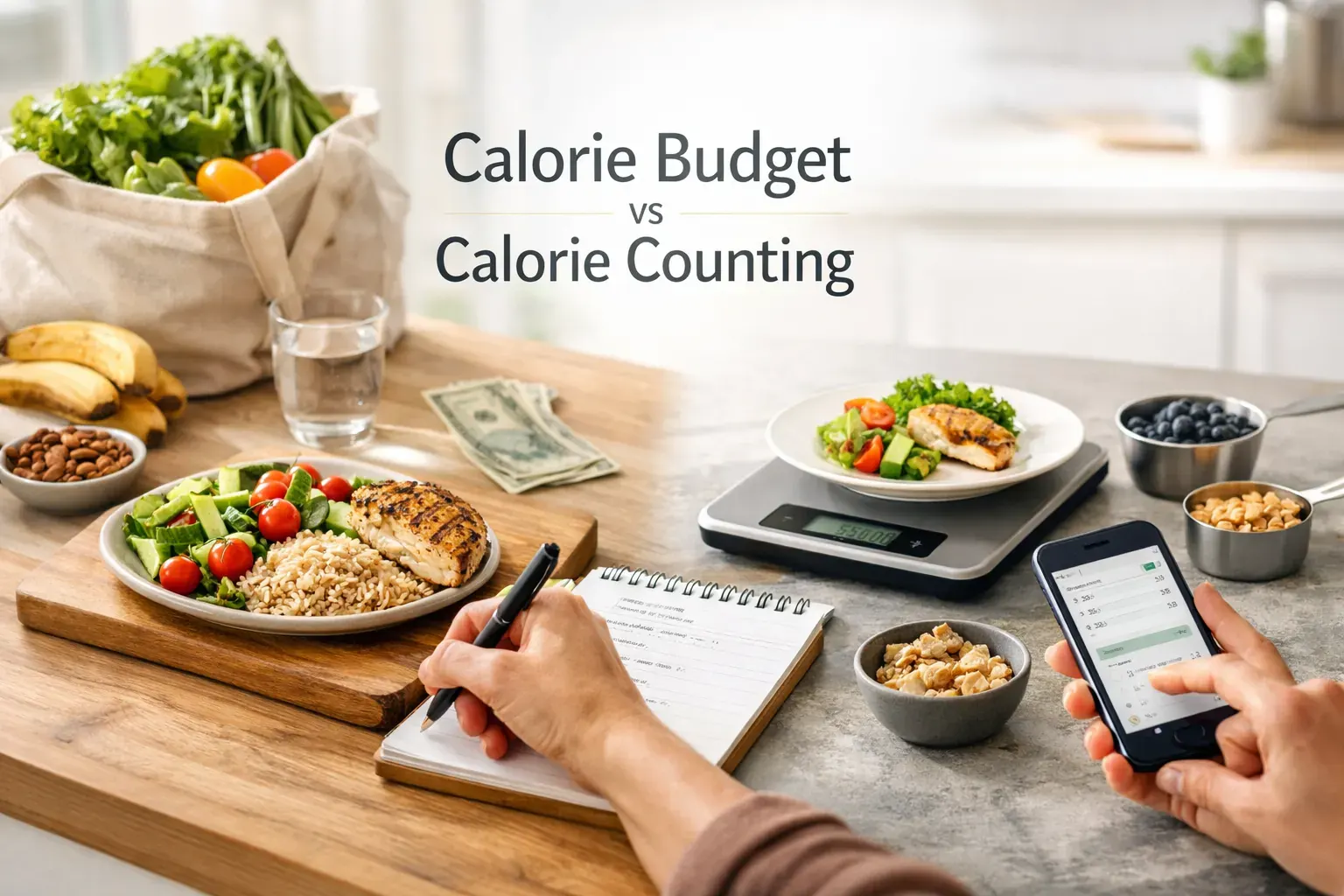
You do not usually quit fat loss because maths is hard. You quit because the process starts to feel like admin. That is why calorie budget vs calorie counting matters. Both methods aim to help you manage intake, but they create very different daily experiences - and that difference often decides whether you keep going next week.
What calorie budget vs calorie counting really means
Traditional calorie counting is exactly what it sounds like. You log what you eat, add up the numbers, and try to stay under a target. It works on paper because weight loss still comes down to energy balance. If you consistently eat fewer calories than you burn, you should lose weight over time.
A calorie budget uses the same maths, but frames it differently. Instead of treating food like a test you can fail, it treats calories like a spending plan. You have a set amount for the day, you decide how to use it, and you adjust when real life happens. That shift sounds small, but for many people it is the difference between feeling in control and feeling judged by an app.
The core principle is the same. The user experience is not.
Why the calorie budget model feels easier to follow
Most people do not struggle with the idea of a calorie deficit. They struggle with friction. Searching for foods, typing in portions, second-guessing restaurant meals, and trying to be perfect at every sitting gets tiring fast.
Calorie counting can become overly focused on accuracy at the expense of consistency. Miss one meal and the day feels ruined. Go over your number and it can feel like you have blown the plan. That all-or-nothing mindset is where many tracking habits break down.
A calorie budget is more forgiving because it reflects how people already think about money. If lunch ran high, dinner can be lighter. If Friday is social, you can plan for it. If one meal is rough estimate territory, the whole week is not automatically off course. The goal becomes managing a budget, not producing a flawless ledger.
That mental shift matters, especially for busy adults who want structure without turning every meal into homework.
Calorie budget vs calorie counting for fat loss
If we are being honest, neither method has a magical metabolic advantage. A calorie budget does not burn more fat just because it sounds friendlier. What changes is adherence.
And adherence is the real engine of fat loss.
If calorie counting helps you stay consistent, it can work well. Some people like precision. They enjoy the numbers, the detail, and the sense of tight control. If that is you, a standard tracking approach may feel clear rather than restrictive.
But if calorie counting makes you procrastinate, under-log, or give up after a few difficult days, then it is not actually the better system for you. A calorie budget often wins because it lowers the daily effort required to stay engaged. Easier logging, faster decisions, and less guilt tend to produce more repeatable behaviour. Repeatable behaviour beats perfect intentions.
This is where simple tools matter. Snapping a meal photo, scanning a barcode, or building a one-tap weekly plan reduces the number of moments where motivation has to do all the work.
Where calorie counting still has value
A calorie budget is not a replacement for awareness. You still need a realistic intake target. You still need to notice patterns. You still need to learn that the salad with three creamy extras may not be the lower-calorie option.
That is where calorie counting has real value. It teaches portion awareness quickly. It shows how small extras add up. It helps you spot the foods that keep you full versus the ones that burn through your daily intake in ten minutes.
For beginners, a short phase of more detailed counting can be useful education. It gives you a better eye for calorie density and helps set a believable budget. The problem starts when education turns into obsession, or when the process becomes so manual that you stop doing it at all.
In other words, calorie counting is a useful skill. It is not always the best long-term operating system.
The biggest trade-off: precision vs usability
This is the real comparison in calorie budget vs calorie counting. Not right versus wrong. Precision versus usability.
Calorie counting can offer tighter detail, especially if you weigh ingredients and log everything carefully. That can help if you are aiming for a very specific target, breaking through a plateau, or learning how your usual meals stack up.
A calorie budget prioritises usability. It is built for the days when you are working late, eating out, grabbing something packaged, or making dinner from whatever is left in the fridge. It accepts that the best plan is the one you can actually run on ordinary weekdays.
For most people managing weight outside of a laboratory, usability is what keeps the wheels turning. Slightly less precision with much better consistency is often the stronger deal.
How to choose the right method for your lifestyle
Start with a simple question: do you need more detail, or less friction?
If you are new to tracking and have no idea where your calories are coming from, calorie counting may help you build awareness. A couple of weeks of closer logging can show you where your intake is climbing without you noticing.
If you already know the basics but keep falling off because tracking feels tedious, a calorie budget is probably the smarter move. It gives you enough structure to maintain a deficit without turning every meal into a spreadsheet.
Your routine matters too. If you cook similar meals at home, detailed counting may feel manageable. If you travel, eat lunch out, juggle family meals, or work unpredictable hours, budgeting is often more realistic. The more variable your life is, the more useful a flexible system becomes.
There is also the mindset piece. If seeing a red number makes you feel like you have failed, budgeting can soften that response. It encourages adjustment rather than self-criticism.
What a better calorie budget system looks like in practice
A good system should make it easy to log fast, plan ahead, and review patterns without fuss. That means less typing and more visibility.
In practice, that might look like snapping your meal instead of manually searching every ingredient. It might mean scanning a barcode when you are in a rush, generating a seven-day plan when you want fewer food decisions, or checking a calendar view to spot where weekends keep stretching your intake. It might also mean exporting a report so your progress is not just a vague feeling but something you can actually review.
That is the practical advantage of a finance-style model. It turns calorie management into a daily decision system rather than a test of discipline. Calorie Bank Credit is built around that exact idea - giving iPhone users a clear calorie spending framework that is faster to use and easier to stick with.
Common mistakes with both approaches
The first mistake is treating one high-calorie meal like a crisis. Whether you count calories or manage a budget, one meal is just one transaction. What matters is the pattern over days and weeks.
The second is setting the target too low. An aggressive deficit may look motivating on day one, but it usually creates hunger, inconsistency, and rebound eating. A sustainable budget is more useful than an extreme one.
The third is ignoring planning. Tracking after the fact helps, but planning ahead helps more. If you know roughly how breakfast and lunch fit into your day, dinner becomes easier to manage.
The last mistake is expecting perfect data. Real life includes estimates, restaurant portions, and meals you cannot fully break down. Useful tracking is not flawless tracking. It is tracking that is accurate enough to guide better decisions.
So which one should you use?
If you want the shortest answer, use the method you can repeat on a busy Wednesday, not just a motivated Monday.
For many people, that will be a calorie budget. It keeps the science of energy balance but removes some of the emotional drag and manual effort that make calorie counting hard to sustain. You still stay accountable. You just do it in a way that feels more like control and less like punishment.
And if you prefer more detail, you do not need to reject calorie counting entirely. You can use precision when it helps and budgeting when life gets messy. The goal is not to win a tracking purity contest. The goal is to build a sustainable deficit you can actually live with.
The best system is the one that lets you make one sensible decision after another, even on ordinary days when motivation is low and dinner is late.