
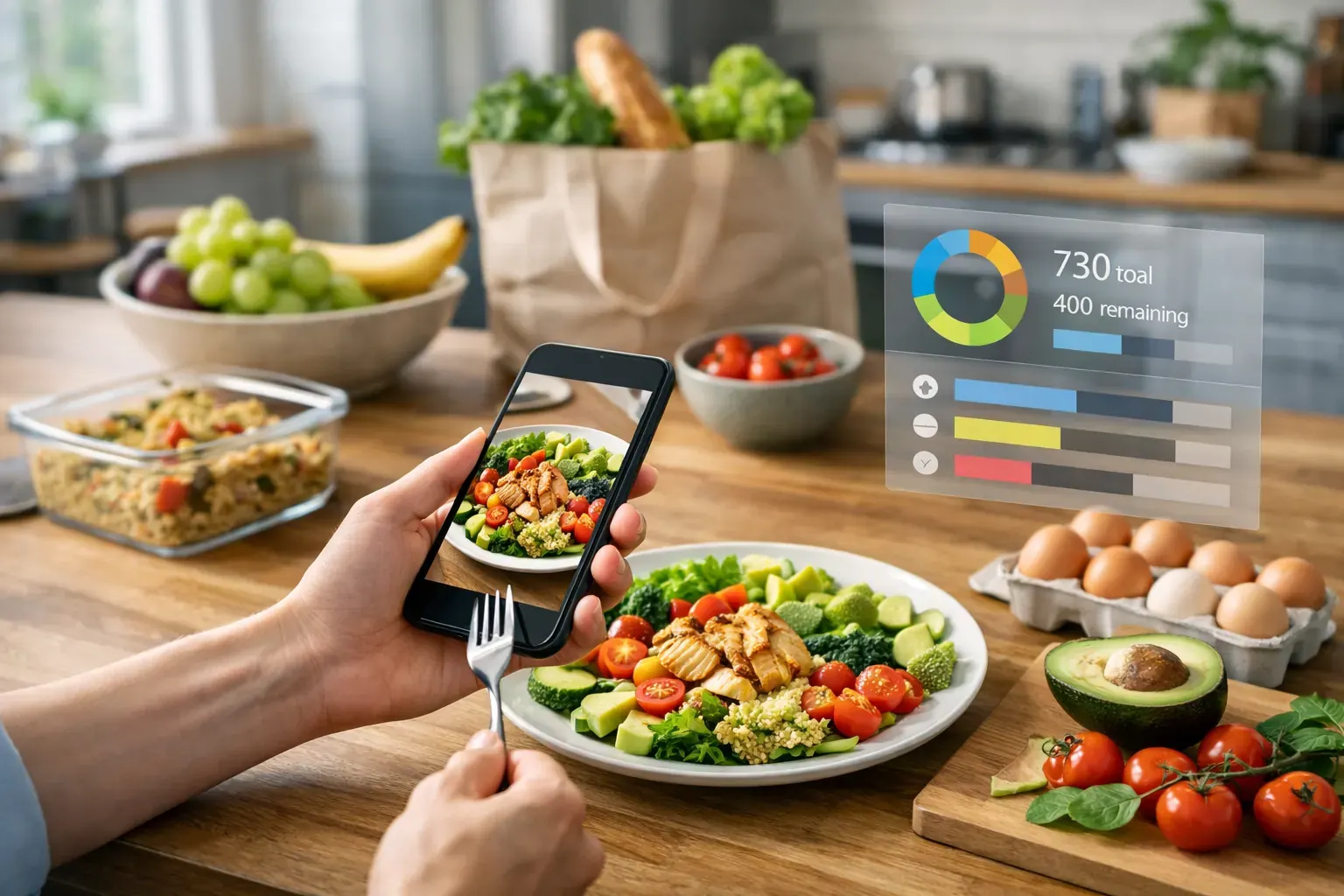
Most people do not stop tracking food because they do not care. They stop because the process becomes a chore. If you are looking for an app to track food habits, that is usually the real problem to solve - not motivation, but friction. The best app is the one that makes logging quick enough to do on a busy Tuesday, clear enough to understand at a glance, and useful enough to help you make better choices the next day.
That means food tracking is not really about building a perfect diary. It is about building a repeatable system. When an app helps you see your intake like a daily budget, plan ahead, and review patterns without judgement, it becomes much easier to stay consistent. Consistency is where the results usually come from.
What makes an app to track food habits actually useful
A lot of apps promise more discipline. Fewer actually reduce effort. That distinction matters because most adults are not short on advice. They are short on time, attention, and patience for manual entry.
A useful food habit app should make the daily admin feel light. If every meal requires a search, several taps, and a guess at portions, you will probably use it for a week and quietly stop. If you can snap a meal, scan a barcode, confirm the estimate and move on, the habit has a chance of sticking.
The second thing that matters is clarity. Numbers alone are not always motivating. For many people, calorie tracking becomes easier when the app frames intake as spending from a daily allowance rather than passing or failing a diet. That small shift changes the experience. You are not being punished for eating lunch out. You are simply deciding how to use your budget.
Planning also deserves more attention than it gets. Tracking after the fact helps with awareness, but planning ahead helps with control. An app that can suggest a 7-day meal structure, generate ideas from ingredients you already have, or show your likely intake before the day gets away from you can save a lot of last-minute decisions.
The features that save the most time
When people search for the best app to track food habits, they often compare calorie databases and chart designs. Those things matter, but speed matters more in real life.
Photo logging is one of the biggest time-savers because it matches how people actually eat. You see your plate, take a picture, and let the app identify the meal. It is not magic, and it will not be perfect every time, especially with mixed dishes or unclear portions. But for many users, a fast estimate they can quickly adjust is far more useful than a perfectly detailed log they never complete.
Barcode scanning is another feature that earns its place quickly. Packaged foods are where manual entry feels especially tedious. Scanning gives you a cleaner hand-off from product to log, which cuts down hesitation. If you eat a mix of homemade meals and convenience foods, this can save several minutes a day.
Calendar-based history is less exciting on paper, but it is often what turns random entries into actual insight. You can spot patterns more easily when meals are tied to days rather than buried in spreadsheets of data. Maybe your weekday breakfasts are fine but your Fridays drift. Maybe weekends are not the problem - late afternoon snacking is. Good tracking should help you notice trends without making you feel audited.
Exportable reports can also be more useful than they sound. Some people want a simple way to review progress each month. Others want something shareable for a coach, trainer, or clinician. If the app can turn your history into a clean PDF, you spend less time recreating your own data elsewhere.
Why meal planning belongs in the same app
Tracking and planning are often separated, which creates extra work. You log what happened in one place, then try to fix it somewhere else. A better setup keeps both jobs together.
If your app can build a weekly plan in one tap, you remove a surprising amount of daily decision fatigue. You do not need a perfect menu. You need a realistic structure. That might mean a few repeat breakfasts, simple lunches, and flexible dinners that still fit your calorie budget.
Recipe generation from ingredients is especially practical for people who want less waste and fewer takeaway decisions. You open the fridge, work with what you have, and get meal ideas that support your target instead of blowing past it. That is a much more sustainable rhythm than constantly hunting for “healthy” recipes you never quite have time to make.
This is also where finance-style thinking works well. When you know your calorie budget for the day or week, planning becomes less emotional. You are not asking whether a food is good or bad. You are asking whether it fits. That tends to create better decisions and less rebound eating.
What to avoid when choosing a food habit app
A sleek app can still be the wrong fit. The first warning sign is complexity dressed up as precision. If the system asks too much of you too soon, you may get impressive first-day data and poor long-term adherence.
The second issue is shame-based feedback. Red warnings, guilt-heavy language, and all-or-nothing scoring can make people abandon tracking after one high-calorie meal. Real progress depends on recovering quickly, not pretending an imperfect day did not happen.
Another common problem is feature overload without workflow. Ten tools do not help if they are scattered and slow. The better question is not how many features an app includes, but how quickly those features help you act. Can you log breakfast in seconds? Can you scan your snack without hunting through menus? Can you plan tomorrow before bed? Utility beats novelty.
It is also worth checking whether the app suits your device and habits. If you are an iPhone user who wants a mobile-first routine, the experience should feel native, fast and easy to use one-handed while standing in the kitchen or queueing for coffee. Convenience is not a bonus. It is the whole game.
A smarter way to think about food habits
Food habits are rarely fixed by one perfect week. They improve when the daily process becomes easier to repeat. That is why the best app to track food habits does more than count calories. It lowers friction, gives you a clear daily target, and keeps your progress visible enough to stay engaged.
For many people, the strongest mental model is budgeting. You start the day with a calorie allowance. Meals and snacks draw from it. Planning helps you spend wisely. Tracking shows where your habits are helping or drifting. There is no drama in that system, which is exactly why it works.
This approach also makes room for real life. Some days you will eat out. Some weeks will be messy. Some estimates will be rough. That does not break the system. If the app is designed well, it lets you adjust, continue, and keep your average moving in the right direction.
That is one reason tools like Calorie Bank Credit stand out. The budgeting model makes calorie management easier to understand, while features like AI food photo recognition, barcode scanning, weekly diet plans, recipe generation and PDF reporting reduce the admin that usually kills consistency. It feels less like dieting and more like staying on top of your numbers.
How to choose the right app for your routine
Before you download anything, be honest about where you usually lose momentum. If logging feels slow, prioritise photo recognition and barcode scanning. If your evenings unravel, focus on meal planning and calendar history. If you like seeing proof of progress, reporting matters more than you might think.
It also helps to think in terms of effort per day. An app that asks for five focused minutes but saves you several poor decisions is doing its job. An app that demands perfect detail and gives little practical guidance is probably costing more attention than it returns.
A good test is this: after a long day, would you still use it? If the answer is yes, you have probably found a system you can trust.
The right app should make healthy eating feel less like a willpower contest and more like a routine you can afford to keep. Choose the one that helps you stay honest, stay calm, and keep going when life gets busy.